

When a former president allegedly claims a fictional $48 million debt to slash his tax bill, the hardworking American taxpayer is the one left footing the bill for the deception. This is no longer just a boardroom scandal; it is a profound test of our constitutional republic and the rule of law.
The Illusion of Liquidity and the Half-Billion Dollar Cliff
Donald Trump looked into the cameras in early 2023 and confidently declared he sat on a war chest of over 400 million USD in liquid cash. It was a classic projection of invulnerability, tailored for a sophisticated American audience that respects immense wealth and free enterprise. But behind the gold-plated doors of the Trump Organization, the math was fracturing under the weight of historic legal exposure. Within a span of mere weeks, the former president found himself staring down an 83.3 million USD defamation verdict awarded to writer E. Jean Carroll, immediately followed by the looming shadow of a civil fraud judgment in New York.
Attorney General Letitia James demanded 370 million USD, a figure Judge Arthur Engoron would eventually push to a staggering 464 million USD. The math simply did not add up, setting the stage for a financial reckoning that would shake his empire to its absolute core. But the true bombshell was hiding quietly in the footnotes of an independent monitor’s report, waiting to detonate.
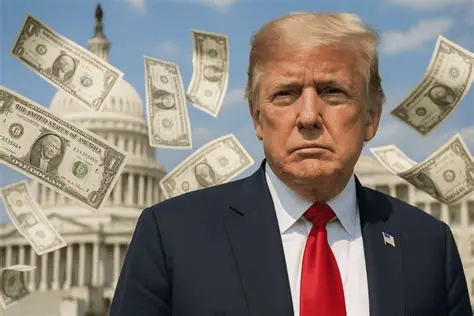
The Phantom Loan and the American Taxpayer
Enter Barbara Jones, a retired federal judge mutually selected by both the defense and prosecution to serve as an independent monitor for the Trump Organization. Her January 2024 report revealed a labyrinth of incomplete disclosures and glaring math errors, but one specific anomaly stopped financial experts cold: a 48 million USD loan between Donald Trump and Chicago Unit Acquisition LLC, one of his own companies. When Jones demanded the paperwork for this massive liability, the Trump Organization admitted the unthinkable. The loan never actually existed.
For years, this phantom debt sat on federal financial disclosures filed with the Office of Government Ethics while Trump occupied the Oval Office. If an American citizen invents a massive liability to pay interest to himself, thereby manufacturing false deductions to reduce his taxable income, legal experts have a very specific phrase for it: tax evasion. Every working-class voter paying their fair share must now grapple with the reality that a billionaire potentially fabricated a fortune in deductions out of thin air. And as investigators dig deeper into these phantom ledgers, what they find next could rewrite the rules of financial accountability entirely.
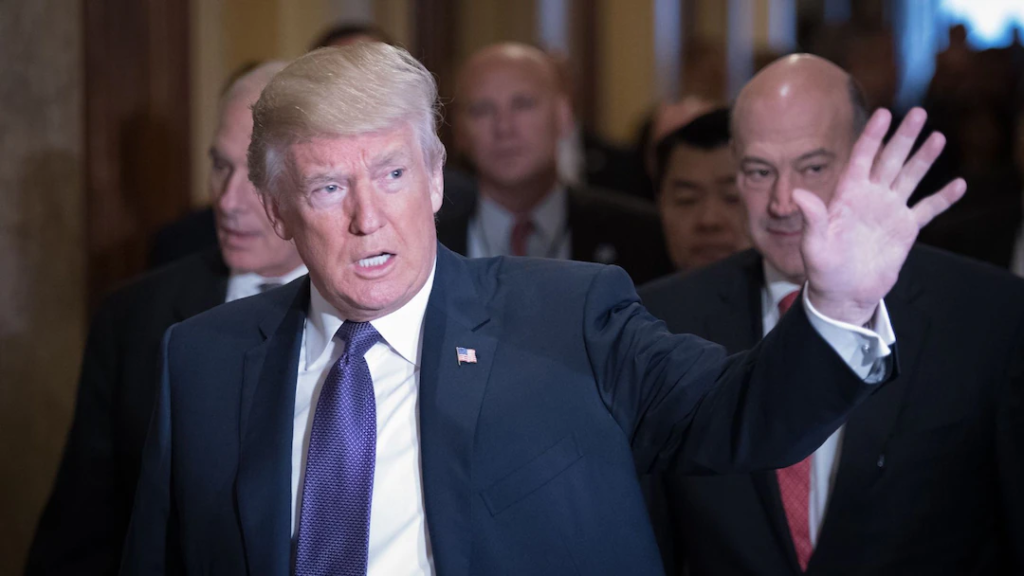
Capitol Hill Reaction and the Partisan Divide
The fallout from the Jones report has ignited a firestorm, deeply fracturing the Capitol Hill reaction. For Democrats, the revelation of a fake 48 million USD debt is the ultimate validation of their narrative: that the Trump empire is built on deceptive accounting. They argue that White House policy regarding ethics must be radically overhauled to prevent such blatant circumvention of transparency laws. Conversely, Republicans view the New York civil fraud trial as a weaponized judicial overreach. To the conservative base, this is not about a math error; it is a coordinated assault on liberty, property rights, and free enterprise.
Trump’s legal counsel, Clifford Robert, dismissed the explosive findings as immaterial discrepancies, bizarrely comparing Judge Jones to Inspector Javert from *Les Misérables*. It is a defense strategy that paints the relentless pursuit of truth as an unwarranted intrusion into private business. Yet, if the debt was merely an immaterial discrepancy, why was it sworn to under penalty of perjury on federal forms for half a decade? The answer to that question might just be the pivot point for the entire political landscape.
A Constitutional Crisis Approaching the 2026 Midterms
The implications of this phantom loan extend far beyond the immediate courtroom drama; they strike at the heart of our constitutional values. The American system relies on the absolute premise that no individual is above the law, and that financial transparency is the bedrock of public trust. When a prominent political figure’s financial reality is exposed as a mirage, it sends shockwaves through the electorate, potentially altering the trajectory of not just the upcoming presidential race, but the 2026 Midterms as well.
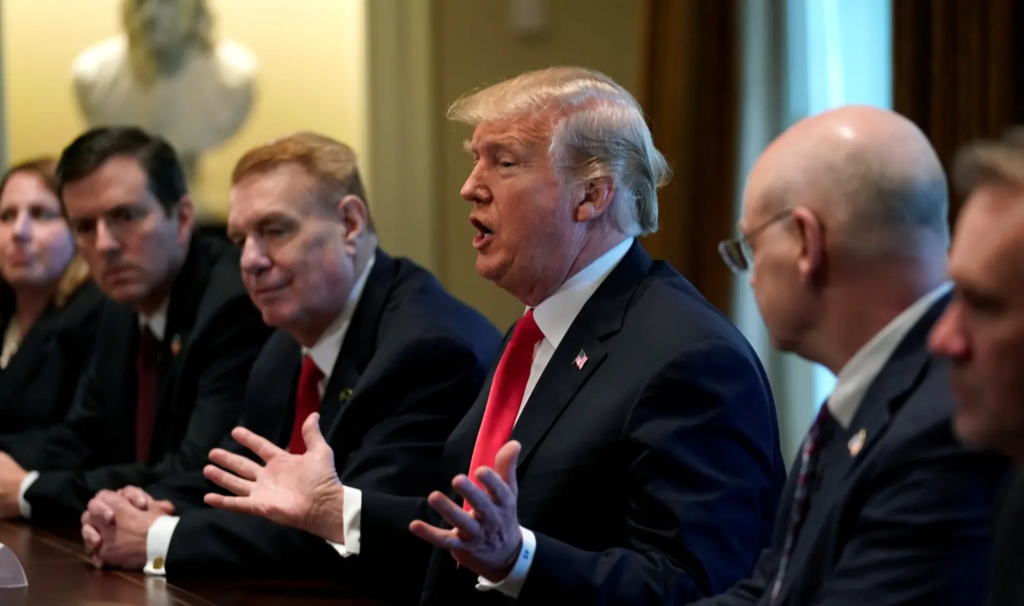
The bond crisis that followed Judge Engoron’s devastating ruling proved the emperor’s cash reserves were vastly overstated. Thirty surety companies refused to underwrite the bond, forcing an appellate court to reduce the requirement to 175 million USD just to prevent the immediate liquidation of iconic New York properties.
The Ultimate Verdict on Liberty and the Hard Truth
We are witnessing the most concentrated period of legal and financial exposure in the history of American politics. The transcript of the New York trial—detailing triplex apartments inflated to three times their actual size and golf courses valued on pure fantasy—will serve as the permanent historical record of an organization that treated the hard truth as a malleable commodity.
The 48 million USD phantom loan is not merely an accounting mistake; it is a glaring testament to a corporate culture operating without effective governance or respect for the American taxpayer. As voters prepare to head to the polls, they are armed with the stark reality about the financial machinations of a man who demands their absolute trust. The legal system grinds slowly, but when the receipts finally come due, they demand payment in full.
Editorial Note: The views and opinions expressed in this article are those of the authors and do not necessarily reflect the official policy or position of any agency or organization. This content is intended to provide diverse perspectives on current events.