
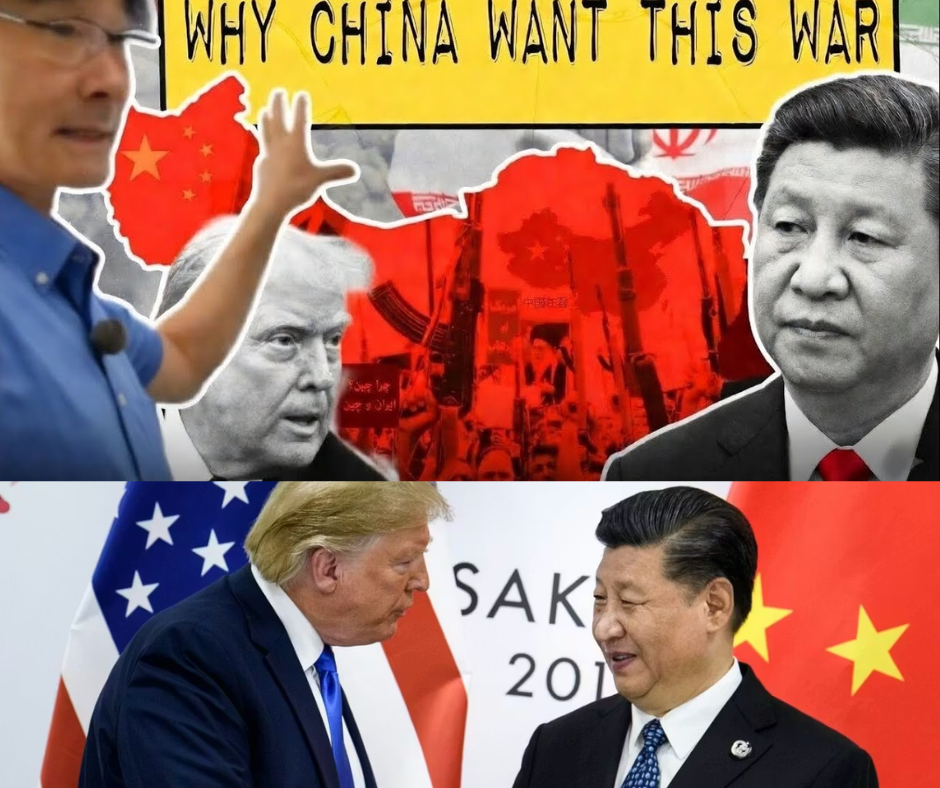
While American warships dodge missiles in the Red Sea and US taxpayers foot a multibillion-dollar bill to police the Middle East, Beijing is quietly cashing in. The hard truth shaking Capitol Hill? Every dollar we spend securing the Gulf is subsidizing China’s blueprint to dismantle our republic.
The Trillion-Dollar Illusion of Control
When the Middle East catches fire, Americans instinctively brace for pain at the pump. But thousands of miles away, the architects of the Chinese Communist Party are watching the exact same footage with profound satisfaction. China is the undisputed largest oil importer on the planet, pulling in roughly 11 million barrels of crude every single day. Domestically, they produce a mere fraction of what their industrial machine demands, leaving them with a staggering 70 percent dependency on foreign oil. More than half of that lifeline flows directly from the Middle East.
For decades, this was considered Beijing’s fatal flaw. In 2003, Chinese leadership coined the term “Malacca Dilemma,” acknowledging that the United States Navy could theoretically strangle the Chinese economy simply by blockading the narrow Strait of Malacca. A nation that cannot power its own grid without the permission of its greatest geopolitical rival is a nation living on borrowed time. Yet, rather than panicking over this vulnerability, Beijing engineered a brilliant, silent subversion of the global order. But the true danger isn’t just a financial bleed—it is a carefully laid trap that Washington is walking into with its eyes wide open.
Capitol Hill Reaction and the Bipartisan Blind Spot
The genius of China’s strategy lies in its exploitation of American blood and treasure. For a generation, the United States has operated under the assumption that projecting military might in the Middle East is a prerequisite for safeguarding global liberty. Today, that assumption is facing a brutal reality check. The Capitol Hill reaction to the latest Gulf escalations reveals a deeply fractured Washington. Republicans are increasingly demanding an “America First” withdrawal, furious that the US taxpayer is subsidizing global shipping lanes while the homeland faces historic inflation. Democrats, meanwhile, are leveraging the crisis to argue that accelerating the green energy transition is a critical national security mandate.
The Strait of Hormuz and the Taxpayer Burden
Both sides are completely missing the strategic forest for the tactical trees. Right now, America maintains military facilities in at least 10 Middle Eastern countries, deploying roughly 43,000 troops across Kuwait, Qatar, Bahrain, and beyond.
We pay the extraordinary financial cost. Our sons and daughters absorb the mortal risk. And China? China simply buys the oil, builds the ports, and reaps the economic rewards of the stability America bleeds to maintain. It is the greatest free ride in the history of international relations. Yet, as devastating as this strategic distraction is, what Beijing is doing to the American dollar is infinitely more terrifying.
Weaponizing Chaos Against the Free World
When the Gulf descends into chaos, it is not China that suffers the most. The White House policy apparatus has fundamentally miscalculated the resilience Beijing has spent two decades building. By January 2026, China amassed an estimated 1.2 billion barrels in onshore strategic reserves. Furthermore, renewables provided a staggering 80 percent of China’s new electric power demand in 2024, displacing millions of tons of gasoline consumption.
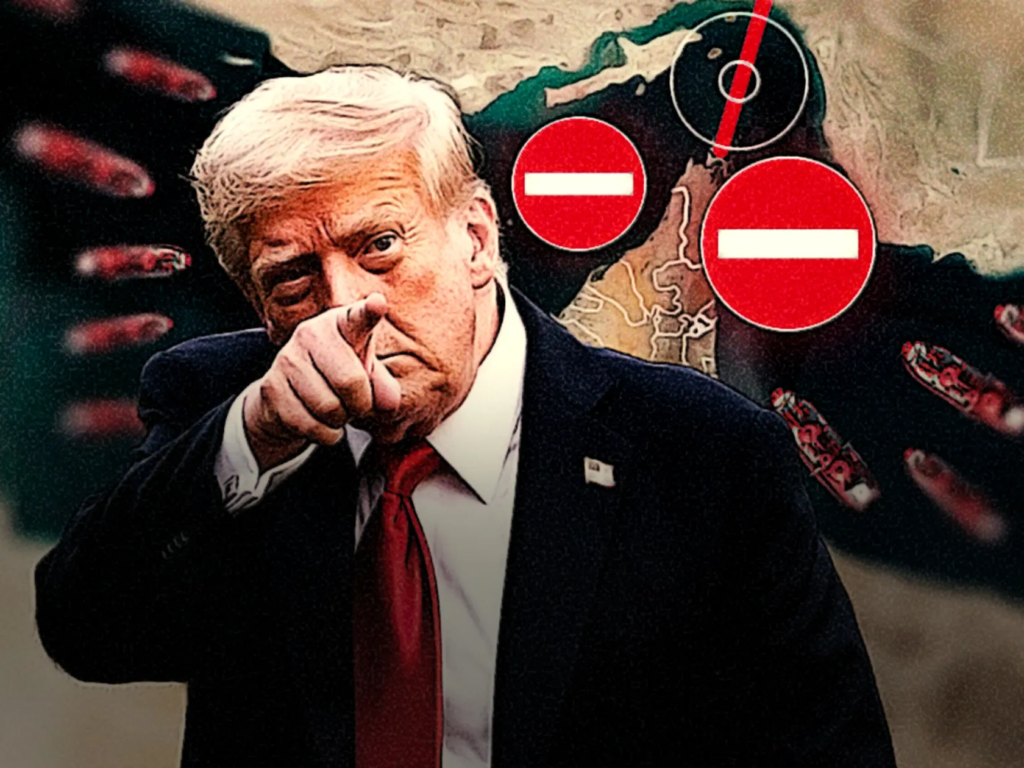
If the Strait of Hormuz closes, Japan—which relies on the Middle East for 75 percent of its oil—would face total economic collapse within months. Taiwan, a beacon of liberty in the Pacific, would be paralyzed. South Korea and Europe would be decimated by liquefied natural gas shortages. China would take a hit, undoubtedly, but it would survive while America’s most vital democratic allies are driven to their knees. Furthermore, every aircraft carrier the Pentagon deploys to the Persian Gulf is an aircraft carrier absent from the Taiwan Strait. Chaos in the Middle East is not an accident for Beijing; it is an active mechanism to stretch American military bandwidth to its breaking point. And once that financial dam breaks, the fallout for the everyday American citizen will be absolutely catastrophic.
White House Policy and the Petrodollar Collapse
The foundation of American global dominance is not just the US Constitution or the military; it is the 1973 agreement that priced Saudi oil exclusively in US dollars. This “petrodollar” system forces every nation on earth to hold American currency, essentially funding our massive national debt and securing our economic liberty. China is actively dismantling this system brick by brick. By June 2024, Saudi Arabia joined mBridge, a cross-border digital currency platform processing oil transactions in yuan. By late 2025, that platform handled over 55.5 billion USD in transactions. Every time Washington uses the dollar as a weapon of sanctions, Beijing offers a sanctioned nation an exit route.
Arming Enemies to Bleed the American Empire
China’s influence campaign is heavily fortified by a ruthless, business-first arms trade that mocks American moral constraints. While Washington agonizes over congressional approvals and human rights conditions, Beijing floods the region with cheap, lethal hardware. A Chinese CH-4 drone costs a mere 4 million USD compared to the 15 million USD price tag of an American MQ-9 Reaper. Beijing sells these weapons to both Saudi Arabia and Iran simultaneously, arming bitter rivals while refusing to pass judgment.
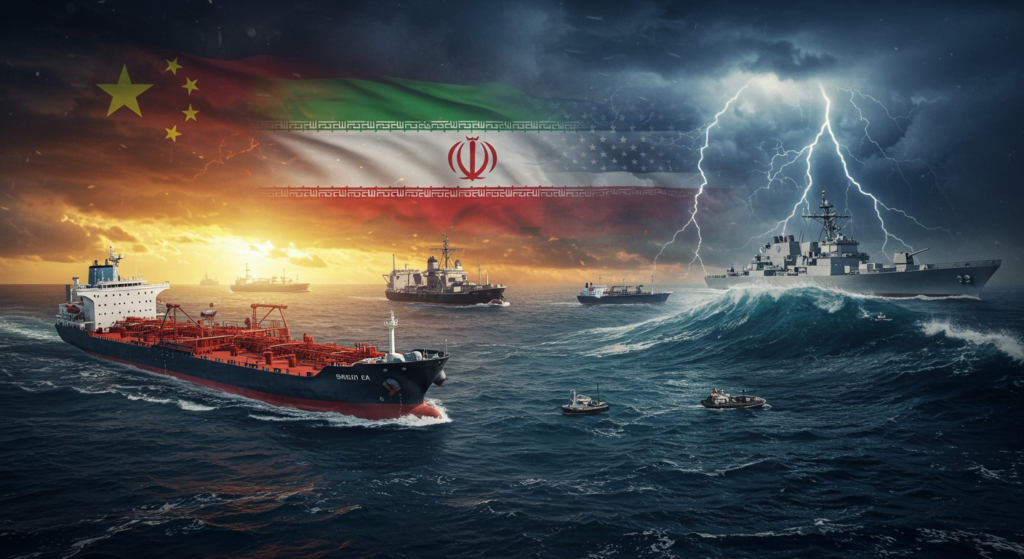
By investing 39 billion USD into Middle Eastern infrastructure through the Belt and Road Initiative in 2024 alone, China is transitioning from a mere trading partner to the undisputed landlord of the region. They brokered a historic peace deal between Iran and Saudi Arabia because regional powers now realize that Washington is no longer the only broker in town. But the most chilling part of Beijing’s master plan has nothing to do with oil at all.
The Looming Shadow Over the 2026 Midterms
As the 2026 Midterms approach, the American voter must confront a terrifying reality. Our political class is squabbling over partisan scraps while the Chinese Communist Party fundamentally rewrites the rules of global power. Beijing is building an alternative economic architecture—inviting Iran, Saudi Arabia, and the UAE into BRICS—and insulating itself from American influence.
We are bankrupting our treasury and exhausting our military to protect the very oil that fuels the Chinese war machine. Unless American leadership wakes up, reclaims our constitutional mandate for sovereign independence, and fundamentally alters our strategic posture, we will soon realize that we spent the 21st century paying for our own defeat.
Editorial Note: The views and opinions expressed in this article are those of the authors and do not necessarily reflect the official policy or position of any agency or organization. This content is intended to provide diverse perspectives on current events.