
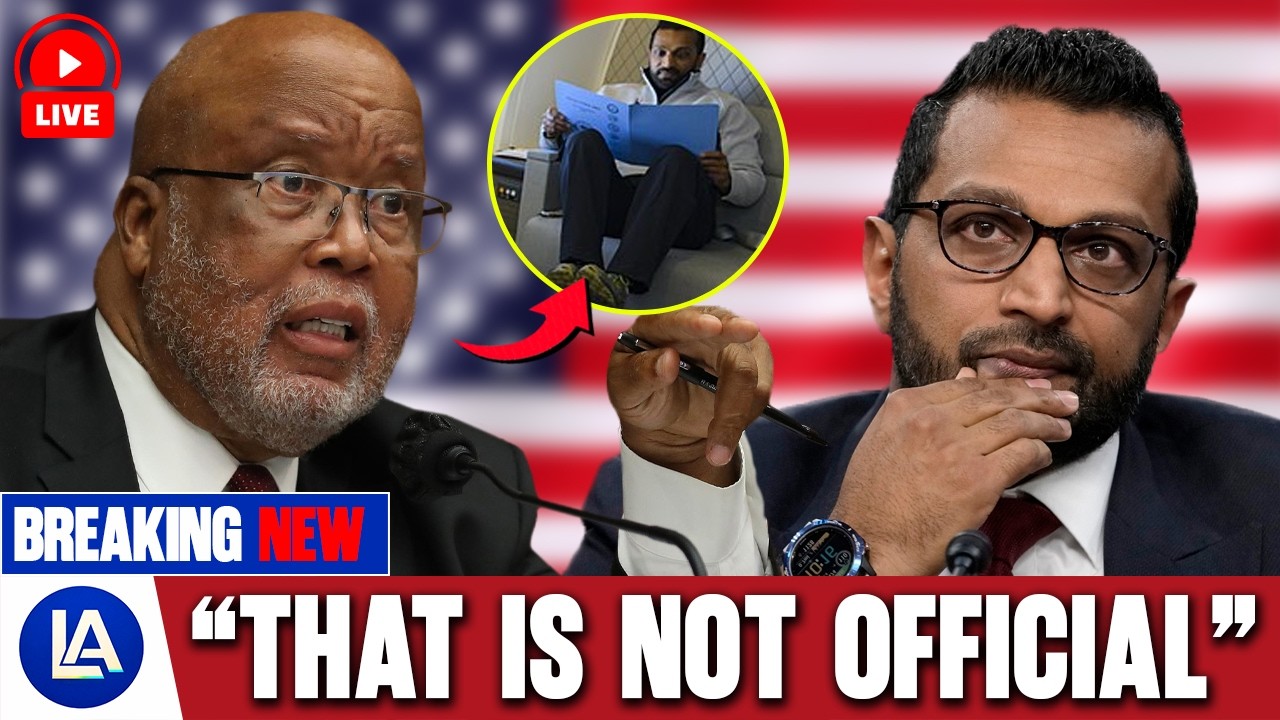
For 92 agonizing seconds on Capitol Hill, the Director of the Federal Bureau of Investigation sat completely frozen. Confronted with explosive documents showing he billed taxpayers $45,000 for a private jet while federal agents drove through a winter blizzard to a mass shooting, Kash Patel’s silence spoke volumes. For the American taxpayer, this was the moment elite impunity collided with hard truth.
The Collision of Documentation and Silence
The House Homeland Security Committee is typically a theater of cautious bureaucratic speak, where lawmakers read prepared statements and witnesses deliver rehearsed evasions. But what happened between Congressman Bennie Thompson and FBI Director Kash Patel was a masterclass in prosecutorial precision. Thompson did not shout. He did not grandstand for a viral clip. Instead, he placed a 34-page legal complaint from the nonpartisan Campaign Legal Center flat on the witness table. The document detailed ten taxpayer-funded flights taken by Patel, disguised as official business but reeking of personal luxury. A $218 reimbursement for a flight on a Gulfstream G550 that costs $45,000 USD to operate. A trip to Milan billed as international law enforcement coordination, juxtaposed with a photograph of Patel in the Team USA locker room, a gold medal around his neck and a beer in his hand. But the true scandal was never just about the accounting; it was about a dark, snow-blind highway in New England where the cost of executive privilege was paid in time and blood.

A Blizzard, A Mass Shooting, and A Grounded Jet
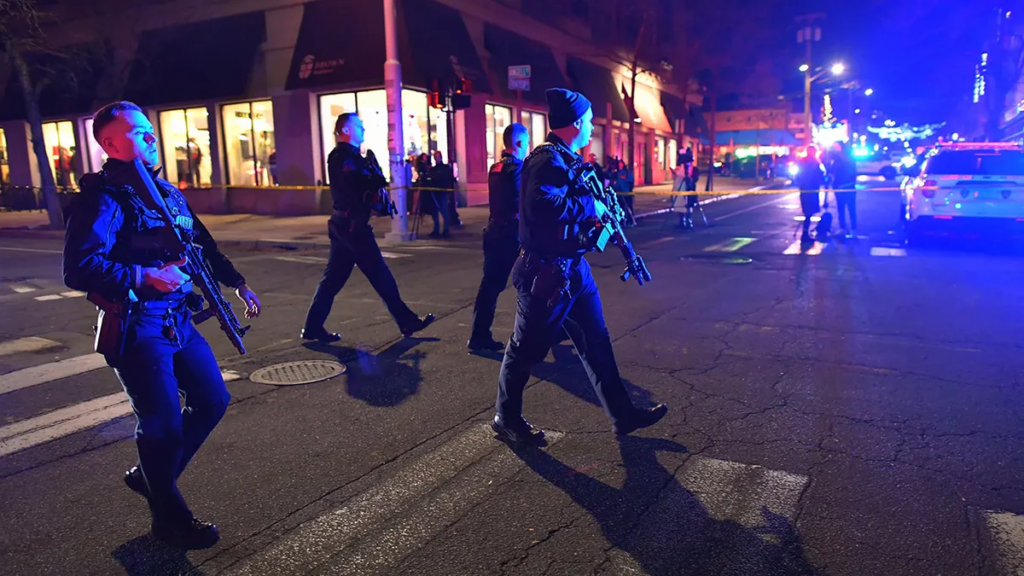
The timeline of December 2025 is where the bureaucratic defense shatters and the constitutional offense begins. Following a horrific mass shooting at Brown University, an FBI evidence response team urgently needed to reach Providence, Rhode Island. Standard protocol dictates the use of bureau aircraft for rapid deployment in times of national crisis. Yet, according to the whistleblower account entered into the congressional record, the jets were unavailable. One was already deployed. The other was idling in South Florida, held on instructions connected to Patel’s personal travel schedule. Consequently, federal investigators were forced to drive hundreds of miles through a blinding northeastern snowstorm, losing critical hours. The immediate Capitol Hill reaction was one of visceral disgust. Lawmakers from both sides of the aisle understand that readiness is the bedrock of national security. When elite comfort supersedes operational necessity, the fundamental contract with the American public is broken. Patel thought the bureaucratic loophole of reimbursing flights at commercial rates would save him, but he forgot about a ghost from the bureau’s past that was about to be summoned live on camera.
The Ghost of William Sessions
With surgical calm, Thompson introduced the historical precedent that turned the hearing from an uncomfortable inquiry into an existential threat for Patel’s career. In 1993, President Bill Clinton dismissed FBI Director William Sessions for the exact same offense: using government aircraft for personal travel and reimbursing the government only at commercial ticket rates. Thirty-three years later, Patel was staring down the barrel of the identical ethical breach. Thompson’s question was devastatingly simple: “Why did you do what William Sessions was fired for doing?” Patel attempted to retreat into the safety of federal travel regulations, arguing his compliance with the letter of the law.
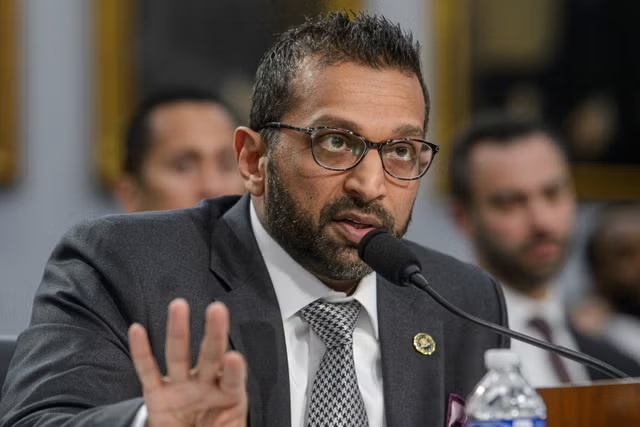
But the spirit of the law, the ethical mandate required of the nation’s top law enforcement officer, had clearly been violated. It highlighted a stark contrast between current White House policy on executive accountability and the historical standard applied to the FBI. The partisan shielding that usually protects powerful men in Washington was suddenly stripped away, leaving an undeniable paper trail that the Department of Justice can no longer ignore.
Partisan Crossfire Ahead of the 2026 Midterms
As we hurtle toward the 2026 Midterms, this scandal offers a potent weapon for political warfare. Republicans have frequently positioned themselves as the party of law and order, while Democrats have championed institutional oversight. Patel’s actions force a reckoning for both factions. Can conservatives defend a bureau director who treats a taxpayer-funded Gulfstream like a personal Uber to visit his girlfriend, Alexis Wilkins, at a professional wrestling event in State College? Can liberals trust the integrity of the DOJ Inspector General’s office to conduct a thorough, unbiased investigation without turning it into a partisan witch hunt? The Campaign Legal Center’s complaint is not a piece of opposition research; it is a formal trigger that legally mandates an evaluation by the Inspector General. This ensures that the paper trail will survive the immediate news cycle. Every decision made by the bureau is interpreted through the lens of credibility, and right now, that credibility is hemorrhaging. As the gavel fell, the hearing ended, but the true reckoning for the nation’s top law enforcement officer was only just beginning.
The Weight of the Public Trust
At the core of the American experiment is a profound constitutional value: no man, not even the Director of the Federal Bureau of Investigation, is above the law or beyond the reach of public accountability.
The FBI depends heavily on public trust to execute search warrants, gather intelligence, and testify in courtrooms. When the American voter sees the director exploiting a $45,000 jet for a $218 reimbursement while agents trudge through a blizzard, the very foundation of that trust fractures. It transforms a technical dispute over travel codes into a glaring indictment of judgment and leadership.
What Comes Next for the Bureau
The 92 seconds of dead silence from Kash Patel will be etched into the annals of congressional oversight. It was the sound of a narrative collapsing under the weight of irrefutable documentation. Now, the burden shifts to the Department of Justice. The investigation will move quietly at first—witnesses contacted, logs reviewed, emails subpoenaed. But the American people are watching, and they demand a standard of transparency that matches the extraordinary power wielded by the FBI. Will the bureau hold its own leader to the same rigorous standards it applies to the citizens it polices? The answer to that question will ultimately define the legacy of federal law enforcement for a generation.
Editorial Note: The views and opinions expressed in this article are those of the authors and do not necessarily reflect the official policy or position of any agency or organization. This content is intended to provide diverse perspectives on current events.