
While Washington waged a loud tariff war, America just quietly lost control of its own energy security. As politicians play games, middle-class taxpayers and Midwest refinery workers are about to pay the ultimate price for a colossal diplomatic miscalculation that permanently redrew the global map.
The Illusion of North American Dominance
For decades, the American public has been sold a comforting fiction: that the United States is an entirely self-sufficient fortress of liberty, entirely insulated from the consequences of its own foreign policy. But beneath the soil and across the borders, a different reality beats at the heart of the American economy. Canada is the single largest source of oil imported into the United States, providing more crude on a consistent basis than the entire Persian Gulf combined. Heavy oil from Alberta’s oil sands feeds refineries across the American Midwest and the Gulf Coast. These facilities were configured at the cost of hundreds of millions of USD specifically to process this unique grade of crude. Quebec’s hydroelectric system is the load-bearing spine of grid reliability from Massachusetts to New York.
Washington treated this deeply integrated cross-border grid as an indestructible given, a foundational assumption of mutual dependency. But White House policy under the Trump administration recklessy tested that assumption, treating the most integrated bilateral energy relationship in the Western Hemisphere as just another disposable bargaining chip in a confrontational trade strategy.
But Washington’s assumption of perpetual leverage was about to face a brutal reckoning, one that would catch the entire political establishment completely blind.
A Miscalculation in White House Policy
The fatal flaw in the administration’s leverage analysis was the arrogant belief that interdependence only flowed north. They assumed Canada sold so much energy to the United States that Ottawa would eventually capitulate to economic pressure. They failed to account for the fact that America depends on Canadian supply for a structurally embedded portion of its own daily survival. More importantly, they failed to account for Mark Carney. The former Bank of England governor understood that the aggressive pressure applied to Canada was not merely a threat to be managed, but a historic opportunity to be seized. While American cameras focused on retaliatory rhetoric, Carney engaged in methodical, deliberate relationship-building across three continents.
The Quiet Sabotage of the Working Class
This is where the grand illusions of geopolitics crash into the harsh reality of the American taxpayer. When insulated elites make confrontational trade decisions, they do not bear the costs. Tariffs do not ravage their household budgets, nor do supply chain disruptions threaten their livelihoods. The true tragedy, however, is not just what was lost in diplomatic backrooms, but the irreversible economic chain reaction that is already heading straight for the American heartland.
The American worker in a Midwestern refinery town and the homeowner in New England whose winter heating bill skyrockets are the ones absorbing this failure directly. The fundamental constitutional promise to promote the general welfare and secure the blessings of liberty is actively undermined when leaders gamble with the very supply chains that keep American homes warm and American factories running. The burden of this diplomatic hubris is entirely regressive, falling squarely on the shoulders of the working class.
Capitol Hill Reaction and the Partisan Divide
The Capitol Hill reaction has been a masterclass in missing the point. Republicans have largely cheered the aggressive, America-First posturing, blind to the fact that swinging a tariff hammer has shattered the very North American energy monopoly that secured US interests. Conversely, Democrats have issued predictable hand-wringing statements about the erosion of diplomatic norms, yet they completely fail to articulate the catastrophic economic threat this poses to union workers and domestic manufacturing. Both sides of the aisle are too entrenched in their partisan warfare to realize that the ground beneath them has shifted entirely. These were not mere diplomatic handshakes; they were ironclad contracts that effectively locked the United States out of its own backyard for the next two decades.
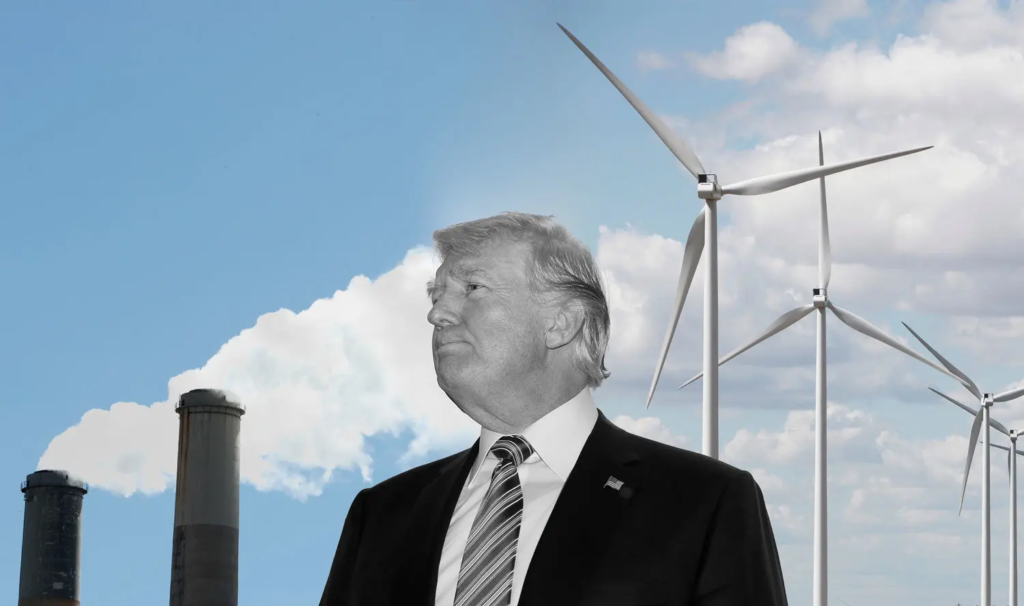
Redrawing the Global Map Without America
Carney weaponized the crisis to activate a massive strategic repositioning of Canadian energy. Recognizing that European nations were desperately searching for reliable, democratic energy partners to replace Russian gas, Canada operationalized the CETA trade agreement. They secured substantive deals for Canadian LNG and clean electricity to flow to Europe. Simultaneously, Carney executed a Pacific pivot, signing critical mineral supply agreements with Japan, South Korea, and Australia. By offering the lithium, cobalt, and nickel required for modern technology, Canada provided a vital democratic alternative to Chinese supply chain dominance.
The Irreversible Infrastructure Trap
The most chilling aspect of this geopolitical realignment is its permanence. When a European nation builds an import terminal configured for Canadian LNG, or a Japanese battery manufacturer signs a fifteen-year critical mineral supply agreement with a Canadian miner, those supply chains are locked in. These are physical, legal, and commercial facts that persist regardless of who sits in the Oval Office. Thousands of miles of pipelines and billions of dollars in infrastructure have been permanently redirected. The United States no longer holds an exclusive claim over its neighbor’s vast resources. The North American energy monopoly is dead, and America is now forced to compete for resources it once took for granted. But the ultimate fallout of this historic blunder has yet to fully materialize, and the ticking clock threatens to detonate just as voters head to the polls.
The 2026 Midterms and the Price of Hubris
As we barrel toward the 2026 Midterms, the consequences of this structural weakening will become the defining crisis of American economic competitiveness. The integrated system that provided American grid reliability and refinery feedstocks is now infected with political risk. Utility companies and industrial users will pass the massive costs of this uncertainty directly to the American consumer.
The architecture of American power relies on being the indispensable partner at the center of the free world. By treating our most deeply integrated ally with contempt, Washington signaled to the globe that American centrality is conditional and American reliability is dead. Canada has built a multipolar energy world that no longer depends on American goodwill, and the United States is waking up to a colder, more expensive, and far more dangerous reality. Liberty and prosperity demand competent stewardship, and the hard truth is that America’s leaders just sold our energy independence to the highest foreign bidder.
Editorial Note: The views and opinions expressed in this article are those of the authors and do not necessarily reflect the official policy or position of any agency or organization. This content is intended to provide diverse perspectives on current events.