
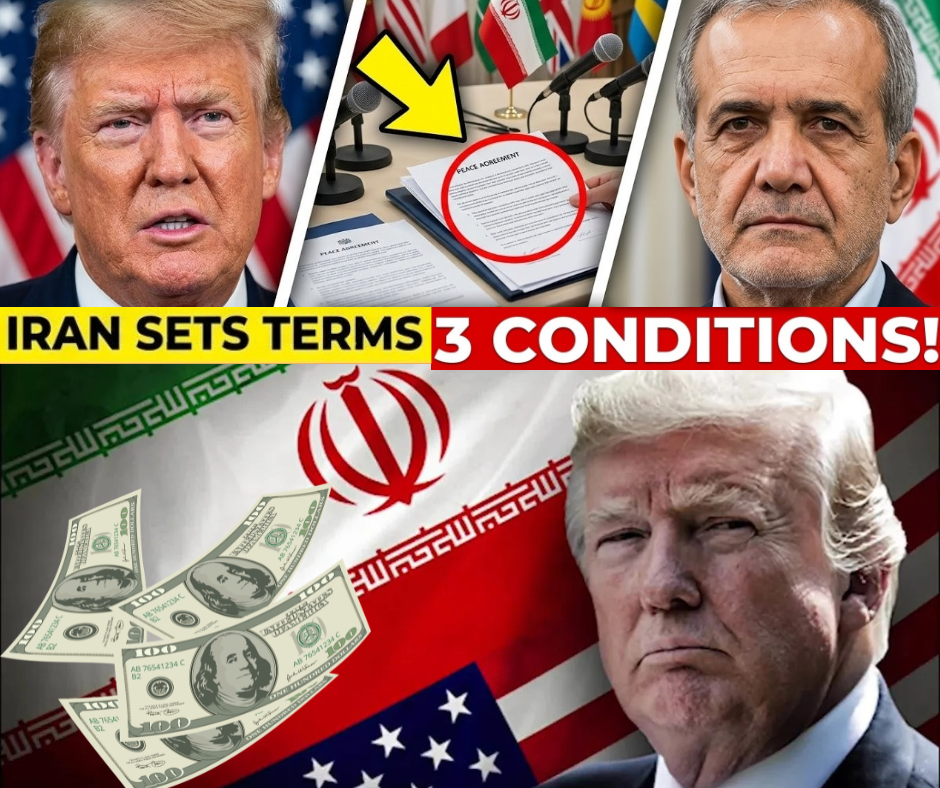
The Washington war machine promised a swift victory, but instead, American taxpayers are bleeding $1 billion a day while gas and grocery prices skyrocket. Now, Tehran has issued a chilling three-sentence ultimatum that forces the White House to choose between endless conflict and an unthinkable surrender.
The Hubris of Operation Epic Fury
On February 28, 2026, the United States and Israel launched Operation Epic Fury, the largest American military offensive in the Middle East since the 2003 invasion of Iraq. The strategy was elegant in its brutality: cut off the head of the snake, and the body dies. Within minutes, American munitions obliterated the compound of Supreme Leader Ayatollah Ali Khamenei. The White House expected chaos. They expected the regime to fracture, paving the way for liberty and a restoration of constitutional order in a region starved for freedom.

President Trump took to Truth Social, declaring the Iranian leadership gone and the war effectively won. But Washington planners failed to realize that decapitating a sovereign state sometimes just unleashes a much deadlier venom.
A $1 Billion Daily Bill for the American Taxpayer
Instead of collapsing, Iran’s clerical assembly doubled down, appointing Khamenei’s hardline 56-year-old son, Mojtaba Khamenei. Defying explicit warnings from the Oval Office, this single act of defiance fundamentally broke the logic of the American operation. Now, the American taxpayer is footing a staggering bill for this intelligence failure. The Pentagon quietly briefed Congress that the first six days of the campaign vaporized $11.3 billion. We are burning through $1 billion a day. Meanwhile, the Strait of Hormuz—a narrow 21-mile waterway handling a fifth of global seaborne oil—is effectively choked off. Gas prices have surged 27 cents in a single week, and urea fertilizer has spiked from $475 to $680 per metric ton. As the financial system’s nerve center in the Gulf begins to fray, a far more dangerous shockwave is hurtling directly toward the American homeland.
Three Sentences That Shattered White House Policy
Today, after 13 straight days of relentless bombing, Iranian President Masoud Pezeshkian did something Washington never anticipated. He didn’t fire a hypersonic missile; he published three surgically worded sentences outlining Iran’s price for peace. Tehran demands the recognition of Iran’s legitimate rights, the payment of reparations, and firm international guarantees against future aggression.

This is not a laundry list of radical demands. It is a mirror held up to the hubris of current White House policy. By demanding the right to a civilian nuclear program under the Non-Proliferation Treaty, Iran is retroactively delegitimizing the entire justification for the American offensive. Yet, it is the second demand that carries legal teeth sharp enough to tear the entire American geopolitical strategy to shreds.
The Constitutional Cost of Endless War
Iran is demanding reparations for the 1,200 Iranians killed and the 5,500 sites devastated by US and Israeli bombs. They are invoking the exact same international accountability frameworks the United States uses to police the globe. For a nation founded on the principles of liberty and the constitutional rule of law, the optics of bombing a sovereign nation’s infrastructure—including a school where 165 children perished—and then refusing to answer to international courts presents a profound moral and legal crisis. Defense Secretary Pete Hegseth insists the US will dictate the terms of unconditional surrender. Israel vows the operation has no time limit. With both sides dug into irreconcilable extremes, the political fallout in Washington is about to become as explosive as the war itself.
Capitol Hill Reaction: Partisan Lines in the Sand
The Capitol Hill reaction has been predictably chaotic, exposing deep fractures in how our elected officials view American power. Hawkish Republicans demand we stay the course, terrified of projecting weakness on the global stage. Democrats are sounding the alarm over the humanitarian toll and the unconstitutional overreach of executive war powers operating without explicit congressional declarations. But the grim reality of the Penn Wharton budget model—which projects a US economic impact as high as $210 billion—is sobering up both sides of the aisle. You cannot force oil tankers through a war zone, and you cannot hide inflation from the American consumer.
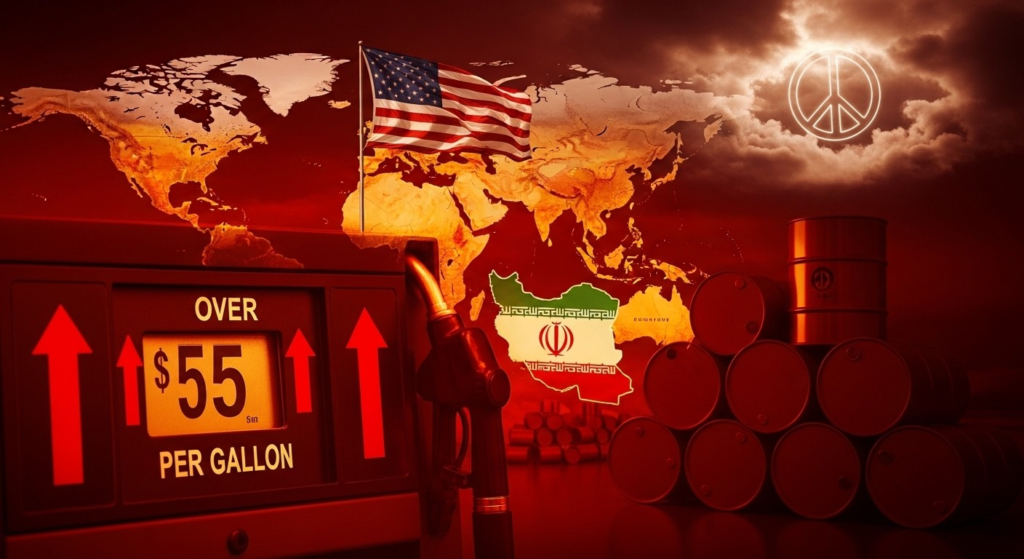
The looming shadow of the 2026 Midterms is forcing politicians to ask a terrifying question: how do you campaign on liberty and prosperity when your constituents cannot afford to drive to work or put food on their tables? The ultimate question is no longer whether America can win this war, but whether the republic can afford the devastating cost of a messy peace.
The Unthinkable Endgame
Trump’s structural problem is immense. Accepting these conditions means admitting the war was flawed from its inception. Declining them guarantees the continued closure of the Strait of Hormuz, pushing oil toward an apocalyptic $200 a barrel. Oman, Russia, and Saudi Arabia are already working the backchannels, realizing that a negotiated off-ramp is the only alternative to total regional immolation. The wires are alive with diplomatic chatter, but Trump wants unconditional surrender, and Iran wants ironclad survival. History is littered with empires that bled themselves dry chasing clean victories in the desert. We are witnessing the terrifying friction between an immovable American superpower and an unbreakable Iranian resistance, and it is the American citizen who will ultimately pay the price.
Editorial Note: The views and opinions expressed in this article are those of the authors and do not necessarily reflect the official policy or position of any agency or organization. This content is intended to provide diverse perspectives on current events.