
American taxpayers are bleeding 891 million USD a day funding a Middle Eastern war that just sent gas prices skyrocketing. With oil crossing $120 a barrel and Washington’s alliance with Israel fracturing, the White House is scrambling to prevent an economic shockwave ahead of the 2026 Midterms.
The Information Vacuum and the $120 Barrel
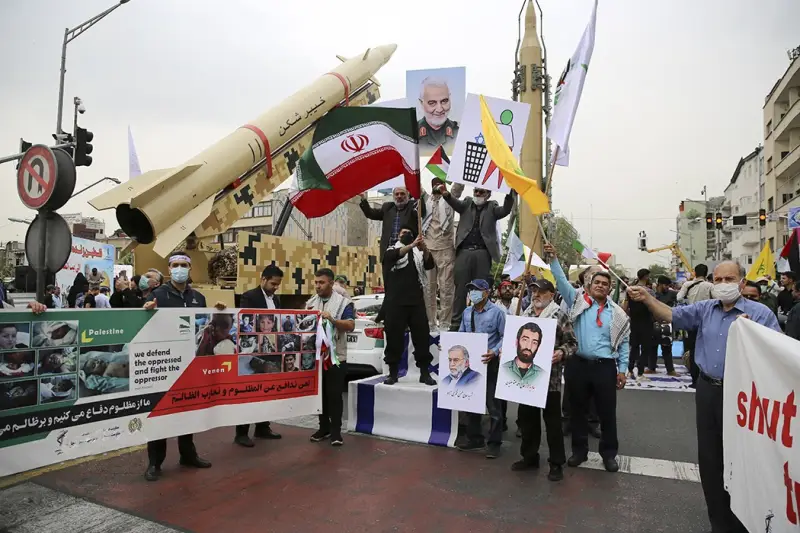
For five agonizing days, the fate of Benjamin Netanyahu was a global mystery. Following a March 2nd Islamic Revolutionary Guard Corps strike utilizing Kyber Shakan ballistic missiles on his official office, the Israeli Prime Minister vanished from live video. Israel dismissed the Iranian claims as fake news, operating under strict wartime media restrictions that choke the transparency free societies demand. Yet, the refusal to show verifiable proof created an information vacuum where every unanswered question became its own kind of answer. While Netanyahu eventually surfaced at the Bait Shemesh missile shelter site—a tragic location where nine civilians were killed—the damage to the global narrative was already done.
The absence of proof can be as powerful as its presence, but what Washington discovered next was far more dangerous than a missing prime minister.
Capitol Hill Reaction to Operation Epic Fury
When Operation Epic Fury launched on February 28th, the Capitol Hill reaction was initially united behind the constitutional values of defending a sovereign democracy and neutralizing a hostile nuclear threat. The stated American objectives were highly specific: destroy Iran’s nuclear program, degrade its missile infrastructure, and remove the Supreme Leader to foster regional liberty. Eleven days later, the reality on the ground reflects a catastrophic failure of intelligence. Mojtaba Khamenei has been named the new supreme leader, the Iranian security apparatus remains entirely intact, and the American taxpayer is footing an astronomical bill for a stalled offensive. Former UN weapons inspector Scott Ritter assessed the situation bluntly, noting that the operation has merely empowered the Iranian regime beyond imagination.
The Cost of Liberty vs. The Cost of Gas
The true fracture between Washington and Tel Aviv is not ideological; it is fundamentally economic. Israel warned the US that Iranian oil facilities would be targeted, but they deliberately withheld the staggering scale of those strikes. When global oil prices breached $120 per barrel last week, it sent shockwaves through the American heartland. Working-class Americans, already squeezed by inflation, are now paying the price at the pump for a foreign conflict with no defined exit strategy.
Washington was furious. Israeli officials remained defiant in the face of American economic anxiety. But behind closed doors, the men sent to fix this crisis just quietly unpacked their bags, signaling a fracture nobody saw coming.
A Diplomatic Snub Felt Around the World
On March 10th, Trump’s two most senior Middle East envoys, Steve Witkoff and Jared Kushner, abruptly canceled their emergency flight to Tel Aviv. These are not low-level bureaucrats; these men architected the Abraham Accords and managed back-channel negotiations from Oman to Geneva. Neither had ever canceled a trip during an active conflict until now. No official reason was provided, and no rescheduled date was announced. This was calculated misdirection by a White House policy apparatus that realizes the war’s objectives have become wildly incompatible. America desperately needs a face-saving off-ramp before the domestic economy tips into a crippling recession. Israel, conversely, demands the total elimination of Iran’s missile manufacturing and the absolute destruction of the IRGC leadership.
The Gulf Chokepoint and White House Policy
Iran’s strategy is a masterclass in asymmetric warfare, targeting the perception of power as much as physical infrastructure. By striking American bases in Kuwait, Bahrain, and Qatar using Russian intelligence, Tehran is applying agonizing pressure on America’s domestic tolerance for military casualties. Furthermore, the strikes on civilian infrastructure have triggered human rights investigations, alienating the international community. Qatar and the UAE have officially stated their territory will not be used for attacks on Iran. These Gulf states are absorbing billions in economic damage, watching their refineries go offline while American military power fails to close the Strait of Hormuz.
If the Gulf governments decide the cost of American protection exceeds the benefit, the entire global security architecture collapses overnight.
Partisan Clashes Ahead of the 2026 Midterms
The political fallout in the United States is rapidly becoming radioactive. Democrats are seizing on the diplomatic chaos and surging gas prices to paint the current administration’s foreign policy as reckless, while Republicans are internally divided between neoconservative hawks demanding total victory and America First populists demanding an immediate exit to protect the homeland. As the 2026 Midterms loom, the prospect of a prolonged, trillion-dollar Middle Eastern entanglement is political poison. Voters who prioritize constitutional liberty and domestic prosperity are rightfully demanding transparency about why their hard-earned dollars are funding a bloody stalemate that is currently enriching our greatest global adversaries.
The Russian Dividend and the American Burden
Every single day this conflict continues, Moscow collects the dividends. With European energy supplies choked and Qatar declaring force majeure on LNG exports, Russia suddenly appears as the only stable energy supplier on the continent. Russian influence is expanding precisely as American power depletes. The Gulf states are quietly calculating their long-term security, listening to Russian diplomats, and wondering if they need to rebuild their alliances around a different partner. Israel’s greatest fear is no longer just incoming Iranian missiles; it is the terrifying prospect of the Gulf states formally asking the United States military to leave. As the doomsday plane circles above, the unbreakable axis of this war is showing its first cracks—and in conflicts like this, the first cracks are always the ones that bring down the dam.
Editorial Note: The views and opinions expressed in this article are those of the authors and do not necessarily reflect the official policy or position of any agency or organization. This content is intended to provide diverse perspectives on current events.