
General Motors just ignited a devastating cross-border trade war, exploiting a 25% tariff to quietly replace stable manufacturing jobs with cheap temporary labor. As Capitol Hill cheers a false victory, American taxpayers and voters are about to be slammed by a catastrophic affordability crisis.
A Corporate Shell Game on the Border
This is not a drill, and it is certainly not the triumph of domestic manufacturing that politicians want you to believe. General Motors, the iconic American behemoth that helped win World War II and put this nation on wheels, has just gutted its operations in Canada. They slashed an entire production shift at the Oshawa assembly plant in Ontario, evaporating the livelihoods of roughly 1,200 people. Just months prior, they shuttered their BrightDrop electric van operation in Ingersoll, wiping out over a thousand more jobs. General Motors claims they are simply realigning production to adapt to the new evolving trade environment. In Washington speak, that is code for dodging the 25% import duties slapped on vehicles crossing the border. But if you think this is just a localized dispute between a corporation and a foreign government, you are missing the most terrifying piece of the puzzle.
The Illusion of American Job Creation
On the surface, current White House policy seems to be working exactly as intended. GM transferred 50,000 units of Chevrolet Silverado production directly onto American soil at their Fort Wayne, Indiana plant. But beneath the patriotic veneer of bringing jobs home lies a chilling reality.
General Motors did not hire full-time, union-protected American workers; they hired 250 temporary workers. These Americans are not receiving the same pay, the same benefits, or the same job security as the workers who just lost everything up north. The automaker is masterfully exploiting the tariff situation to restructure their labor costs, using international trade policy as a smokescreen to squeeze the working class on both sides of the border. And while Capitol Hill reaction remains bitterly divided along partisan lines, the smartest money in the world has already seen the writing on the wall.
The Oracle’s Warning and the $347 Billion Red Flag
When Warren Buffett speaks, the financial foundations of this country tremble. The Oracle of Omaha purchased 10 million shares of GM back in 2017 at around $34 a share, a classic value play on an American staple. Yet, he completely liquidated his position by 2023. Why? Because Buffett recognizes that the auto industry has become a minefield of razor-thin margins and crushing regulatory burdens. At his annual meeting, Buffett explicitly warned that trade should not be weaponized, calling tariffs an “act of war” to some degree. Today, Berkshire Hathaway is sitting on a staggering $347 billion in cash. When the greatest investor in modern history refuses to deploy capital in this environment, it is a flashing red siren that our economic liberty and free enterprise system are under siege. But the devastation stretches far beyond the stock market and right into the epicenter of a massive technological failure.
The Electric Vehicle Mirage and a $7.2 Billion Writedown
The forced march toward an all-electric future is crashing violently into economic reality. General Motors recently absorbed a staggering $7.2 billion writedown on its electric vehicle business. The Ingersoll plant was designed to pump out 50,000 BrightDrop vans annually, yet they sold fewer than 2,000 in 2024 and under 4,000 in the first three quarters of 2025. Union leaders are furious, with Unifor’s national president accusing GM of sacrificing workers to appease political agendas. At the local level, workers are so desperate they are threatening to physically occupy the facilities.

This is not just a labor dispute; it is the total collapse of a supply chain that took three decades to build. And while American automakers retreat to lick their wounds, a foreign adversary is quietly slipping through the backdoor.
Canada Strikes Back—and Opens the Door to China
The Canadian government is not taking this lying down. Industry Minister Melanie Joly went on national television and declared a ruthless clawback of every taxpayer dollar given to GM. Ottawa had already served a default notice to Stellantis over an idled plant in Brampton, signaling a seismic shift in how governments handle multinational subsidies. But the real danger lies in the vacuum GM leaves behind. Toyota is rapidly moving into Ontario to produce the RAV4, and Ottawa is openly flirting with the idea of inviting Chinese state-backed automakers like BYD to set up shop.
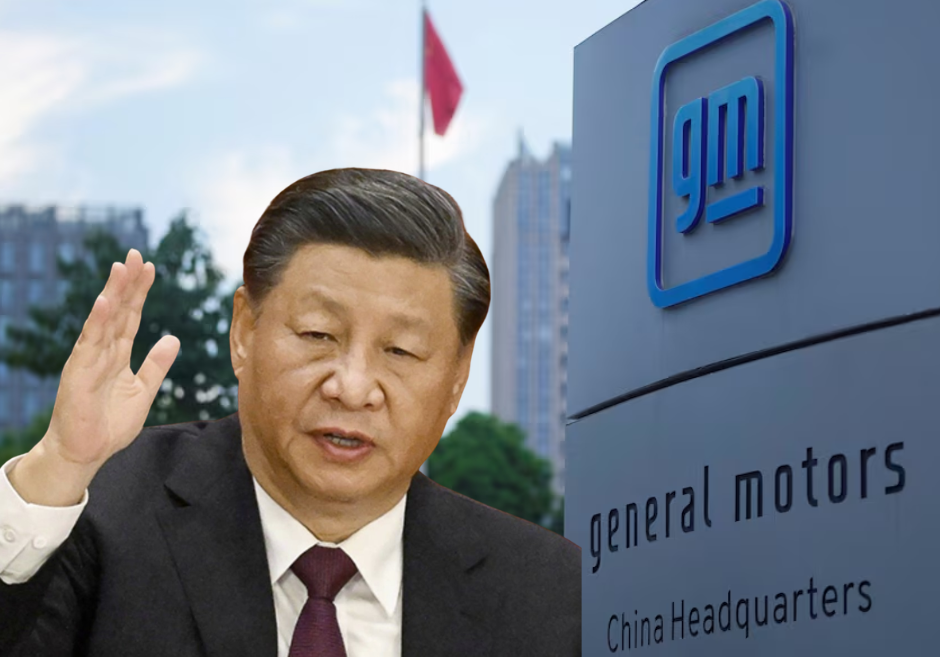
If Beijing establishes a manufacturing beachhead just a few hundred miles from Detroit, the national security implications for the United States will be catastrophic. Yet, the true cost of this economic nationalism is not just geopolitical; it is about to hit you directly in the wallet.
The Affordability Crisis Hitting American Driveways
Make no mistake: corporations do not pay tariffs; the American consumer does. A top executive at Sonic Automotive recently issued a dire warning that an affordability crisis is imminent. Toyota has already confirmed that tariffs cost them roughly $8 billion in just nine months, calling the current environment highly disruptive and unsustainable. GM and Ford are bleeding billions in tariff costs, and they have no choice but to pass those expenses onto the American voter. As we barrel toward the 2026 Midterms, the price of a new vehicle will skyrocket out of reach for the average citizen. This fundamentally threatens the constitutional liberty of movement and the pursuit of prosperity that defines the American dream. We are watching the ghost of Flint, Michigan—a city hollowed out by corporate abandonment and government failure—resurrect itself on a continental scale, and nobody in power has a plan to stop it.
Editorial Note: The views and opinions expressed in this article are those of the authors and do not necessarily reflect the official policy or position of any agency or organization. This content is intended to provide diverse perspectives on current events.