
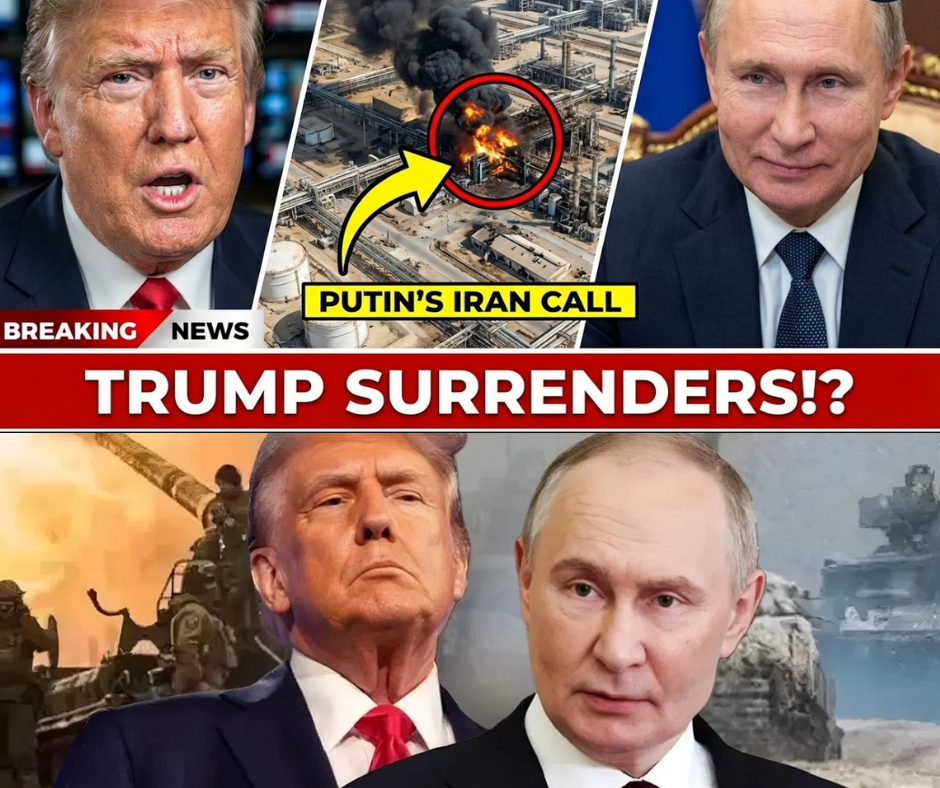
The American taxpayer is currently funding a Middle Eastern war the Commander-in-Chief claims is over, while the Pentagon insists it has just begun. As oil prices whipsaw and multi-million-dollar American drones drop from the sky, a chilling reality is taking hold: Wall Street and Vladimir Putin are now directly manipulating US military strategy.
The Commander-in-Chief’s Wall Street Pivot
When the United States launched its sweeping military campaign against Iran, the White House policy was absolute: eliminate the regime, neutralize the ballistic missile threat, and dismantle the nuclear enrichment capabilities within five weeks. It was sold to the American public as a necessary defense of liberty and a demonstration of unparalleled constitutional power. Six days in, reality rewrote the script. With markets plunging and panic setting in, Donald Trump bypassed traditional diplomatic channels and called a CBS reporter. He did not announce a strategic breakthrough or a ceasefire. He simply whispered sweet nothings into the ears of panicking stock traders, declaring the war “pretty much complete.”
The market manipulation was instantaneous. The S&P erased its daily losses, and oil prices that had been screaming toward $115 a barrel suddenly plummeted by thirty percent. It was a masterful, if deeply cynical, stroke of financial engineering wearing a commander-in-chief’s uniform. But while the stock tickers flashed a comforting green in New York, a far more brutal reality was bleeding out inside the Pentagon.
A Department of War at War With Itself
Transparency is the bedrock of a constitutional republic, yet the American voter is currently receiving two completely opposite realities from the same administration. Days before the president’s CBS phone call, Defense Secretary Pete Hegseth sat down with 60 Minutes to deliver a grim assessment. Hegseth explicitly warned the public that the military operations were “only just the beginning.” The Department of Defense doubled down, issuing a statement that they had “only just begun to fight.”
This is not a mere communications gap; it is a catastrophic failure of leadership. The United States has already lost eleven MQ-9 Reaper drones, bleeding millions of taxpayer dollars in the skies over the Middle East. Capitol Hill reaction has been sharply divided. Democrats point to the glaring contradictions as proof of absolute chaos, while Republican hawks are left paralyzed, unable to defend a war their own president is publicly dismissing. Yet, the most terrifying fracture in American strategy was not between the White House and the generals, but who was waiting on the other end of the president’s next phone call.
The Moscow Mandate and the 2026 Midterms
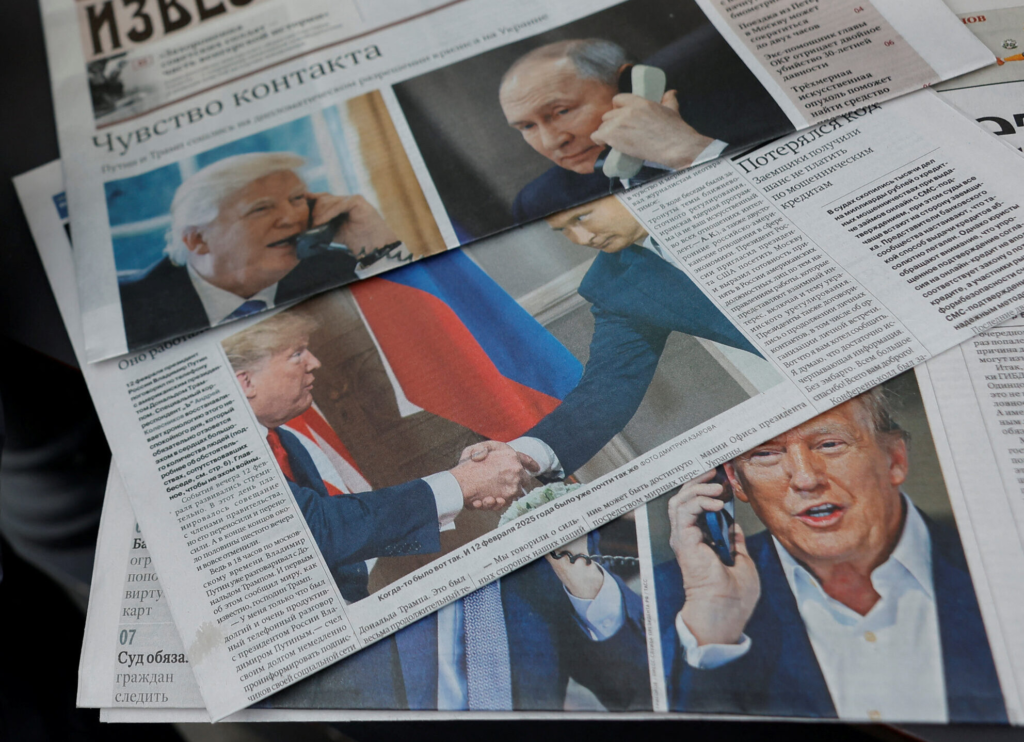
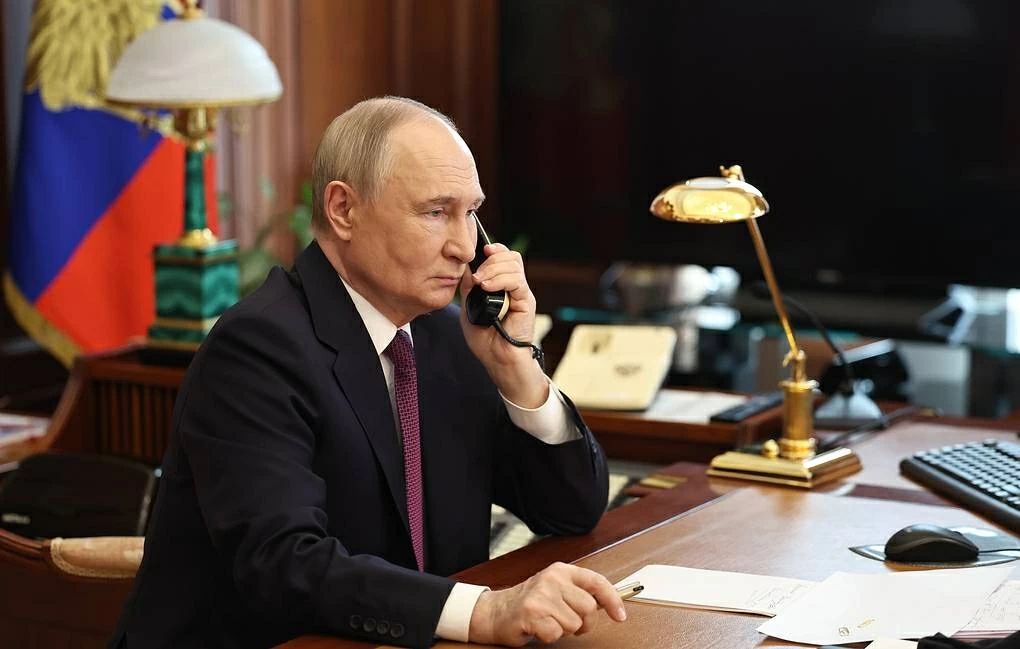
Before Trump declared quasi-victory on national television, he picked up the phone to speak with Vladimir Putin. According to the Kremlin readout—which the administration notably did not dispute—Putin shared a proposal to end the conflict. Let the hard truth of this sink in: in the middle of a kinetic conflict, the President of the United States consulted the leader of a foreign adversary who has been the single greatest beneficiary of the crisis.
Surging oil prices created a massive financial windfall for Russia, exacerbated by the administration’s recent dropping of critical sanctions. Putin did not fire a single shot, yet he is winning by simply watching American credibility collapse. Reports now suggest the administration is considering lifting even more sanctions, allowing Russian oil to flood global markets. Washington had just handed Moscow the keys to the Middle East, triggering a geopolitical earthquake that American voters have not even begun to process.
The Entrenchment of Theocratic Tyranny
The core objective of this military campaign was regime change. Instead, the exact opposite occurred. Leadership in Iran did not transition to a Western-aligned reformer. It transferred to Mojtaba Khamenei, a hardliner widely regarded as even more extreme than his father. Kamal Kharrazi, a top foreign policy adviser to the Supreme Leader, went on international television to declare that Iran’s military remains robust and that diplomacy is dead.
Rather than projecting the overwhelming strength of the American republic, the administration inadvertently entrenched theocratic power in the first week of combat. The nuclear infrastructure remains intact. The proxy forces are activating. With adversaries emboldened and the American war machine stalling, our most critical allies are quietly heading for the emergency exits.
Fracturing Alliances on Capitol Hill and Beyond
Israel, our most important regional ally, is already discussing exit ramps, privately doubting if the regime can actually be toppled. France expects the conflict to drag on for weeks. And where is the American president while the international coalition fractures? He is retreating to his Doral golf resort.
While Article One constitutional duties go unattended, members of Congress are spending thousands at the president’s own property. During a recent retreat, Trump called the war a “short-term excursion,” made missile sounds with his mouth, referred to the Iranian people as “quite nasty,” labeled Senator Chuck Schumer a “registered Palestinian,” and casually mentioned his desire to crush American healthcare. This is not the behavior of a wartime leader; it is the performance of a man watching his own architecture crumble. This leaves the American voter staring down the barrel of three deeply unsettling scenarios, none of which end with a traditional victory.
The True Cost to the American Taxpayer
Whether this ends in a managed deescalation that leaves Iran stronger, an escalation spiral that pushes oil past $150 a barrel and triggers a global recession, or a Putin realignment that cedes Middle Eastern dominance to Russia, the American taxpayer will foot the bill. Every dollar increase in oil ripples through your grocery bill, your commute, and your heating costs.
As we barrel toward the 2026 Midterms, the electorate must demand the hard truth. You do not win a geopolitical confrontation by contradicting your own Pentagon and begging adversaries for a bailout. In war, credibility is the only currency that matters more than ammunition. And right now, the United States is entirely bankrupt.
Editorial Note: The views and opinions expressed in this article are those of the authors and do not necessarily reflect the official policy or position of any agency or organization. This content is intended to provide diverse perspectives on current events.