
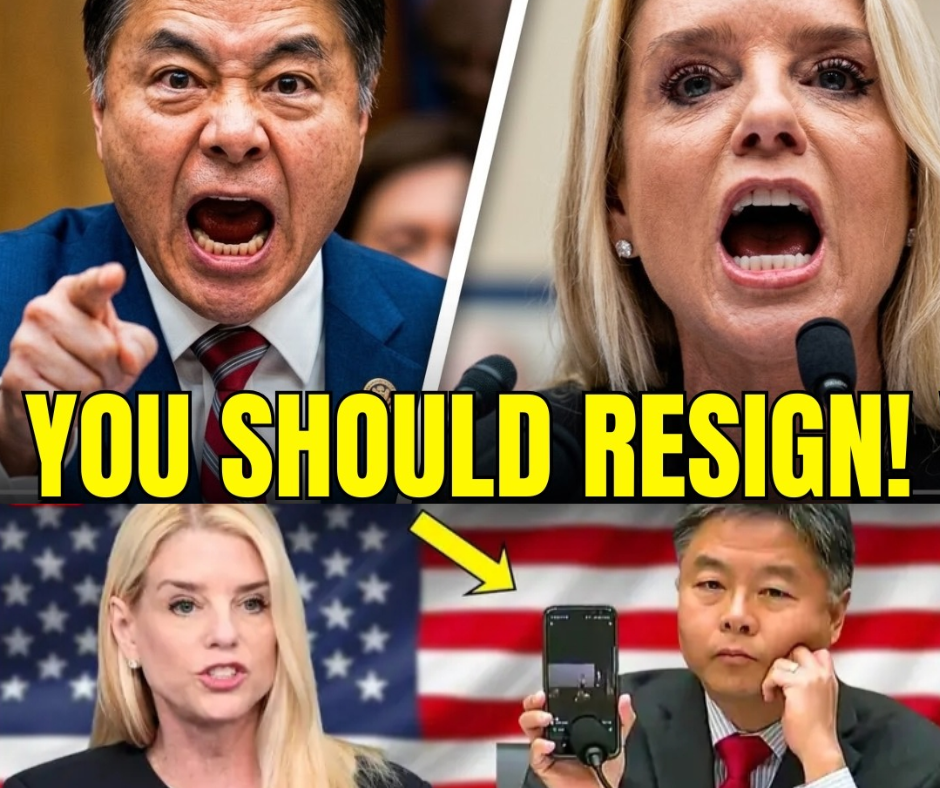
Washington, D.C. — What unfolded in that congressional hearing room was more than a routine oversight session. It was a political and moral collision that exposed the deep fractures in America’s justice system — and reignited one of the most explosive questions of our time: who is being protected, and why?
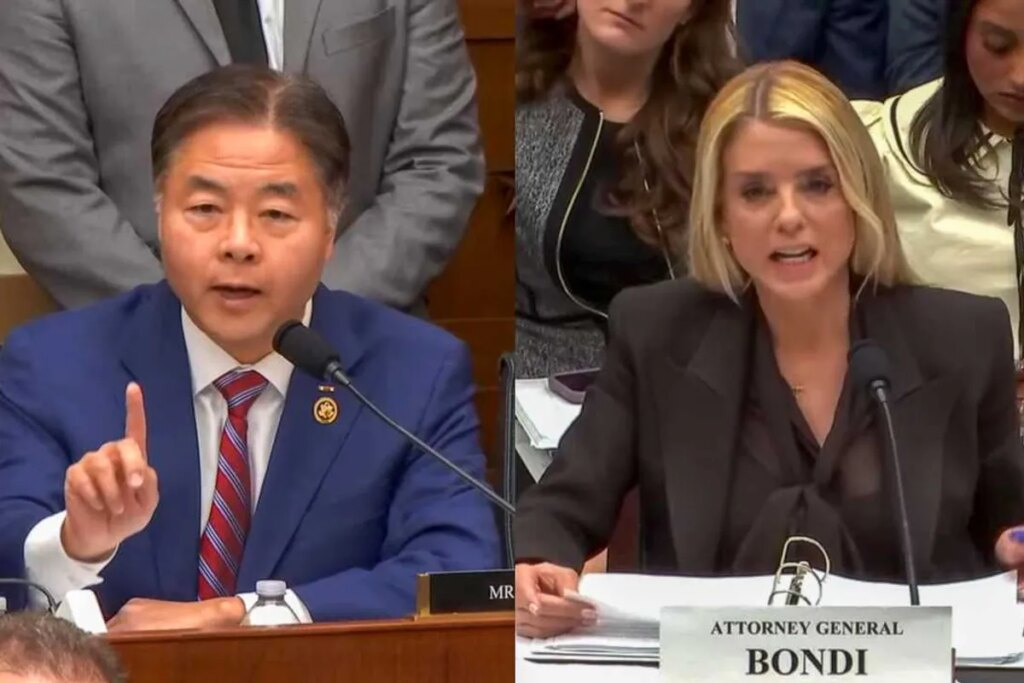
When Congressman Ted Lieu confronted Attorney General Pam Bondi over the handling of the Jeffrey Epstein files, the exchange quickly escalated into one of the most charged moments in recent Capitol history. Lieu didn’t just ask questions; he presented photos, cited federal law, and invoked witness testimony — all while accusing the Department of Justice of shielding powerful figures linked to Epstein’s trafficking network.
Bondi’s response was defensive, measured, but politically revealing. She pointed to previous administrations, naming Merrick Garland, Bill Barr, and Alex Acosta — a bipartisan chain of Justice Department leadership that, in her view, had also failed to pursue accountability. But to critics, that wasn’t an explanation. It was an admission of continuity.
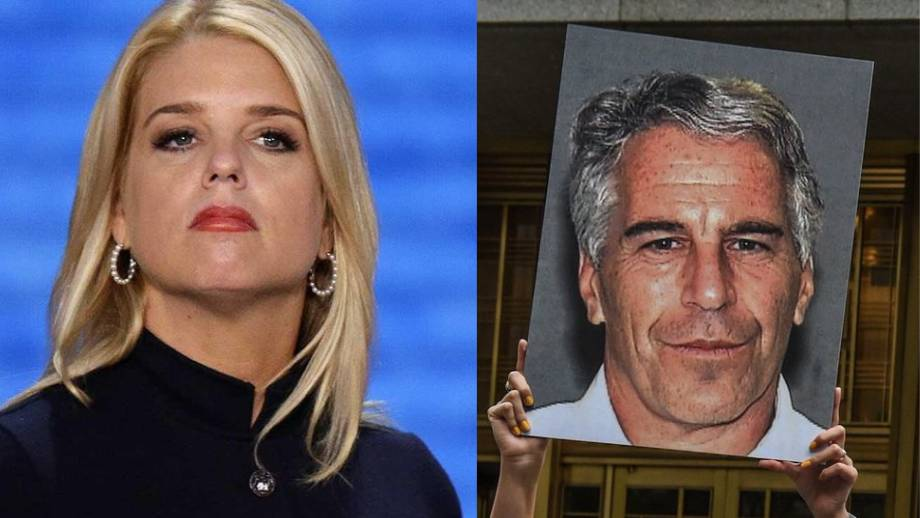
The Epstein case has become more than a criminal investigation; it is now a symbol of institutional credibility. Over 1,000 victims, a global trafficking network, and years of unanswered questions have turned the issue into a geopolitical fault line — one that stretches beyond American borders into European royal circles, intelligence communities, and financial elites.
Lieu’s central argument was simple: under the Federal Victims of Trafficking Protection Act, anyone who participated in Epstein’s operation — knowingly or unknowingly — could face prosecution. His use of photos showing Prince Andrew with an Epstein victim wasn’t just a visual tactic; it was a legal assertion. If those images were enough to confirm the presence of trafficking victims, then why were they not enough to trigger new investigations?
Bondi countered with the Justice Department’s July 2025 memo, stating that investigators “did not uncover evidence that could predicate an investigation against uncharged third parties.” To her, the legal threshold had not been met. To her critics, the threshold had been moved.
The moment that captured the public’s attention, however, came when Lieu shifted the focus to Donald Trump. Video footage of Trump at Epstein’s social gatherings was introduced, followed by a witness statement alleging disturbing conversations and encounters. Bondi’s immediate response — “There is no evidence that Donald Trump has committed a crime” — ignited the room.
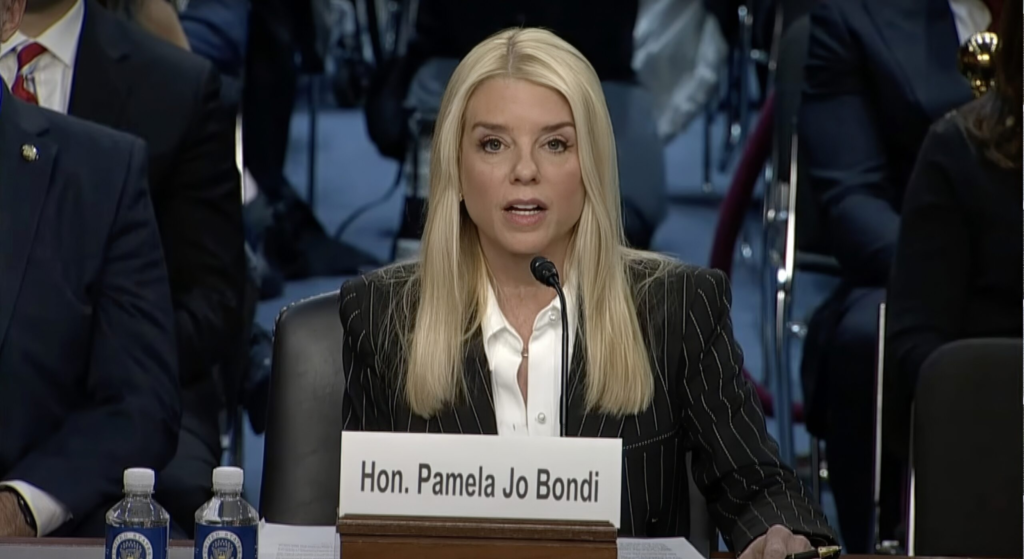
What followed was less a legal debate and more a political standoff. Lieu accused Bondi of misleading Congress. Bondi accused Lieu of grandstanding. And the American public, watching live, was left with a deeper question: is the Justice Department independent, or is it entangled in the political machinery it is meant to regulate?
From a geopolitical perspective, the Epstein saga mirrors broader global tensions between accountability and power. Around the world, governments struggle with the same dilemma: how do you prosecute individuals whose influence touches intelligence agencies, financial institutions, and political leadership? The Epstein network, with its international reach, has become a case study in how power can obscure justice.
Historically, moments like this echo past scandals that reshaped American trust in government — from Watergate to Iran-Contra. Each revealed that the greatest threat to democracy is not external enemies, but internal secrecy. When institutions appear to protect elites rather than citizens, public confidence erodes, and political polarization deepens.
The hearing’s aftermath has already sparked fierce debate across the country. Supporters of Bondi argue that Lieu’s accusations were politically motivated and lacked prosecutable evidence. Critics argue that Bondi’s refusal to reopen investigations demonstrates systemic protection of powerful individuals. Social media erupted, with Americans divided not just by party, but by their interpretation of justice itself.
In the broader political landscape, the confrontation underscores the 2026 electoral reality: trust in institutions is at a historic low. Both parties are using the Epstein case as a rhetorical weapon, not just to attack opponents, but to position themselves as champions of accountability. Yet the irony remains — the very system being criticized is the one they all inhabit.
For military historians and geopolitical observers, the parallels are striking. In times of national crisis, nations often rally around external threats. But in this era, the greatest battle is internal — a struggle over transparency, legitimacy, and the meaning of justice in a democracy.
As the hearing concluded, the tension lingered. No arrests were announced. No investigations reopened. But the narrative had shifted. The American public had witnessed a rare moment where power, law, and politics collided in real time — and the outcome remains uncertain.
One thing is clear: the Epstein files are no longer just about a disgraced financier. They are about the credibility of the American system itself. And as long as questions remain unanswered, the debate will continue — in Congress, in the media, and in the hearts of a nation demanding to know who, if anyone, will finally be held accountable.