
Where Is JD Vance? War, Loyalty, and the 2028 Shadow Fight Inside MAGA
Vice President JD Vance is not missing. But in Washington’s hyper-theatrical politics, absence can speak louder than presence—and lately, his absence from the most consequential foreign policy moments has ignited a fierce debate inside the Republican Party.
As the Trump administration navigates escalating tensions with Iran and a widening confrontation that has rattled global energy markets, Vance has been conspicuously out of the frame. He was not front-and-center during high-level meetings over Venezuela. He was not prominently visible at Mar-a-Lago as the administration weighed military action. And in a White House that prizes optics almost as much as outcomes, that matters.
The question echoing through Washington: Is JD Vance being sidelined—or is he repositioning himself for 2028?
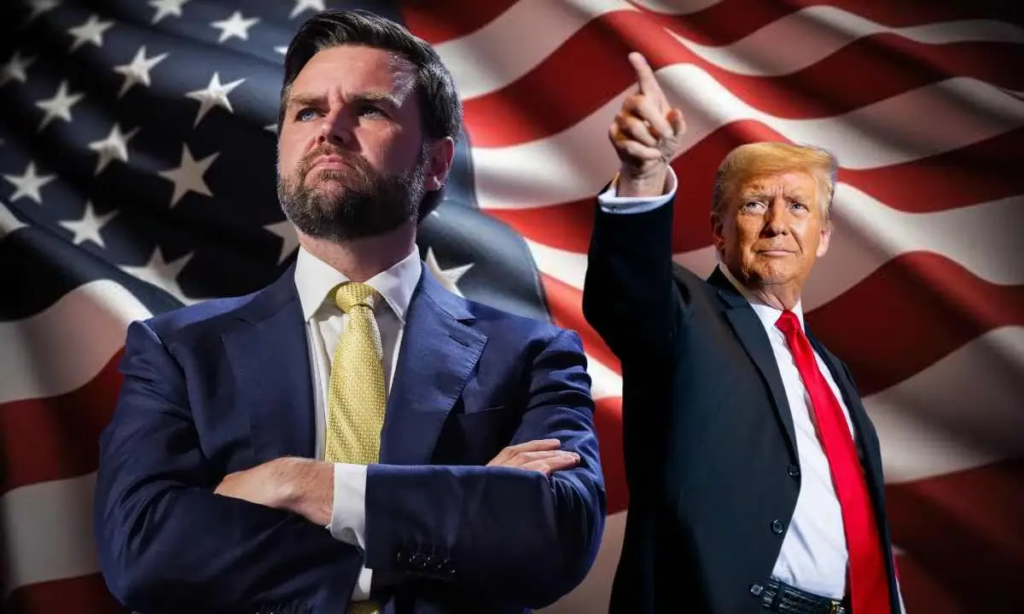
The Anti-Interventionist in a War Presidency
Vance rose to national prominence not only as a cultural conservative but as a leading voice of the GOP’s anti-interventionist wing. In a 2024 Wall Street Journal op-ed, he made clear that his primary reason for backing Donald Trump was simple: Trump started no new wars. In October 2024, he reiterated, “Our interest, I think, very much is not going to war with Iran.”
That record now complicates his role in an administration that has chosen confrontation.
Within the Republican coalition, Vance represents a faction deeply skeptical of foreign entanglements—the Steve Bannon-aligned populist nationalists who view “forever wars” as betrayals of working-class America. That faction has, for years, argued that Washington’s bipartisan foreign policy consensus drained blood and treasure from the American heartland while enriching defense contractors and foreign elites.
But as missiles fly and oil prices surge, that faction appears to be losing influence.
Vance has publicly defended the administration’s actions, arguing that President Trump has clearly defined objectives and will not allow the United States to slide into a multi-year quagmire. Yet critics argue he is attempting to straddle an impossible divide: reassuring anti-war voters while standing by a president who just authorized military escalation.
In today’s political climate, authenticity is currency. Trump can shift positions because his supporters view him as fundamentally consistent in temperament—if not in policy. Vance, by contrast, risks appearing calculated. And in a populist era, appearing calculated can be fatal.
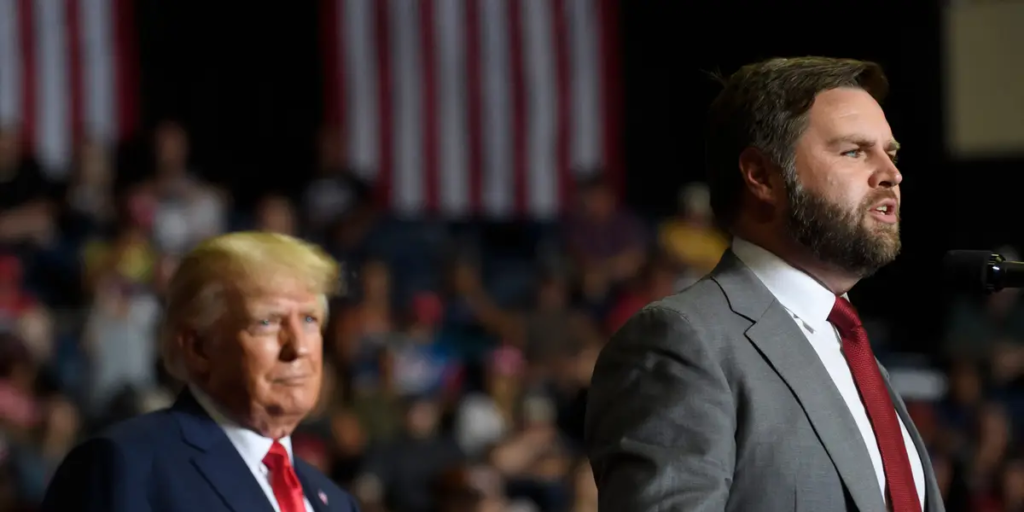
Loyalty Tests and the Trump Factor
Donald Trump has always demanded visible loyalty. History offers parallels. In 1960, President Dwight Eisenhower was asked to name a major contribution made by Vice President Richard Nixon during his administration. Eisenhower quipped, “If you give me a week, I might think of one.” The remark landed like a missile in Nixon’s campaign headquarters.
Political observers now wonder whether Vance is experiencing his own version of that moment.
Reports suggest that Trump dismissed concerns about Vance’s reservations regarding military action, implying it “didn’t take much persuading” to bring him onboard. In Trump-world, hesitation can be interpreted as disloyalty—even if temporary or strategic.
The Vice President, a former Marine who served in Iraq, brings credibility on war and national security. That background once strengthened his anti-interventionist case. Now it complicates it. If he breaks openly with the president, he risks political exile. If he fully embraces the escalation, he risks alienating the base that sees him as their champion.
He cannot be half-MAGA. In this movement, you are either all-in—or you are out.
The Economic Wildcard
Beyond internal Republican dynamics lies a larger risk: the economy.
Oil prices have jumped sharply in the wake of hostilities. Gas prices, which had hovered in the low $2 range in some regions, have climbed rapidly above $3 in others. Liquefied natural gas markets are tightening globally. Analysts warn that disruptions in the Strait of Hormuz—whether through mining, tanker slowdowns, or proxy attacks—could trigger cascading supply shocks.
Strategists are already whispering the word no president wants to hear: stagflation.
The Federal Reserve faces a trap. Inflationary pressure from energy markets could limit its ability to cut rates. Yet slowing growth—exacerbated by geopolitical instability—may demand monetary easing. If GDP forecasts slip by even 50 to 100 basis points, the political consequences heading into the midterms could be severe.
Democrats see an opening. Rather than arguing the morality of confronting Iran—an issue complicated by bipartisan distrust of Tehran—they may frame the conflict as an economic burden: a “war tax” no voter explicitly endorsed. Rising gas prices, healthcare subsidy cuts, and global instability could become a potent campaign narrative.
History underscores the risk. Energy shocks have toppled presidencies before. From the 1970s oil crisis to the inflationary spiral that haunted Jimmy Carter, voters often punish leaders not for foreign policy doctrine—but for prices at the pump.
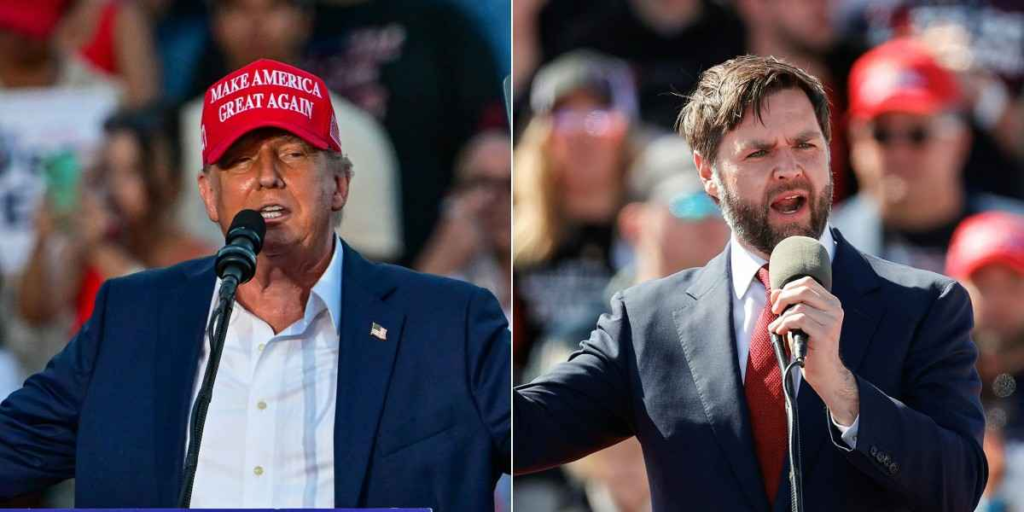
A Glimpse of 2028
For Vance, the stakes extend beyond the current crisis. 2028 looms.
If Trump views successors as rivals rather than heirs—a pattern consistent with his political style—no vice president is guaranteed safe passage. Some speculate Trump ultimately prefers a fragmented field, ensuring that his influence remains central long after he leaves office.
Meanwhile, other figures—like Secretary of State Marco Rubio—are reportedly ascending within the administration’s public narrative. But in Trump politics, today’s praise can become tomorrow’s purge.
Vance may be gambling that history rewards the man who warned against overreach. Or he may be discovering that in Trump’s Washington, caution is indistinguishable from weakness.
The Debate Ahead
Is JD Vance being marginalized—or strategically repositioned? Is the Republican Party undergoing a genuine ideological struggle between populist restraint and muscular nationalism? And will voters ultimately judge this confrontation through the lens of security—or affordability?
One thing is certain: wars are never just fought overseas. They are fought in markets, in party primaries, and in the battle for political identity.
JD Vance is not gone. But in a presidency defined by dominance and loyalty, even a momentary step out of frame can feel like the beginning of a reckoning.