
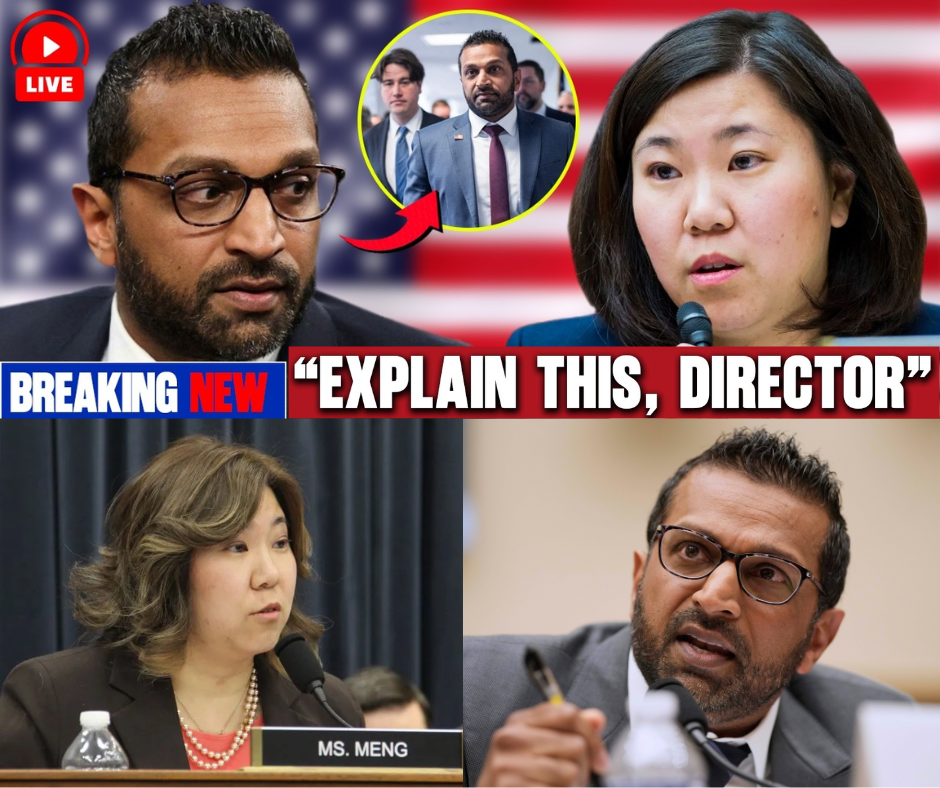
American taxpayers fund a multi-billion-dollar intelligence apparatus to keep the homeland safe, but what happens when the men in charge blindfold the public? A bombshell Capitol Hill confrontation just exposed a terrifying national security cover-up, leaving voters demanding the hard truth.
The Illusion of a “Robust” Homeland Defense
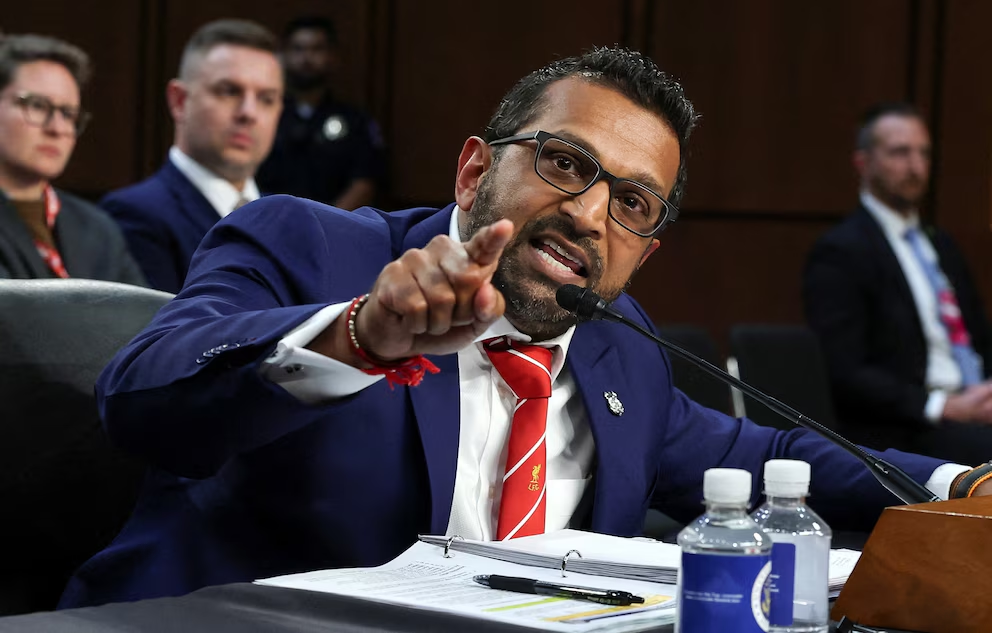
The American public was fed a dangerous fiction. While White House policy projected absolute strength overseas, the domestic reality was quietly crumbling. FBI Director Kash Patel sat before the Senate and assured the nation that the bureau’s counterintelligence operations were “robust.” It was a calculated, calming word. But inside the FBI, the truth was bleeding out. Representative Grace Meng dragged that truth into the blinding light of a House Appropriations Subcommittee hearing, dropping a classified internal assessment onto the table that used a far more terrifying phrase: “capacity degradation.” But understanding how we reached this chilling contradiction requires looking at the exact moment the shield was lowered.
A Timeline of Vulnerability and Bloodshed
To comprehend the sheer gravity of this intelligence failure, one must look at the timeline that left American soil dangerously exposed. On January 27th, the FBI gutted CI12, its primary domestic counterintelligence unit tasked with hunting Iranian espionage networks across the United States. Twelve vital personnel—including the section chief and a senior analyst with a sprawling network of confidential informants—were abruptly terminated. Four days later, the United States military launched Operation Epic Fury, raining fire on Iranian targets thousands of miles away. The geopolitical temperature skyrocketed, and the very unit designed to catch the inevitable blowback had just been decapitated. What happened next would force every lawmaker in Washington to question who was actually steering the ship.

The Anatomy of an Intelligence Collapse
Intelligence is not a machine you can simply unplug and plug back in. It is a fragile ecosystem built on trust, human relationships, and constitutional fidelity. When you remove the agents, the informants vanish into the shadows. The Society of Former Special Agents of the FBI—hardly a partisan outfit—issued a stark warning that these dismissals “seriously undermine” the workforce. Yet, Patel sat just three feet from Meng and clung to the word “robust.” The internal FBI assessment, however, painted a picture of absolute devastation. When Meng placed that classified document face-up on the desk, the Capitol Hill reaction was visceral. The room froze. It was the exact moment the political theater died and the terrifying reality of our national security apparatus was laid bare. But the true cost of this institutional deception was about to be measured in American communities.

Capitol Hill Reaction and the Partisan Divide
On March 3rd, just weeks after the CI12 purge, a shooting in Austin, Texas, left three people wounded. Investigators immediately began hunting for ideological motives tied to the overseas conflict with Iran. While no direct link to the CI12 firings has been definitively proven, the timing is a bitter pill for the American taxpayer to swallow. We spend billions of USD annually to ensure the homeland is fortified, yet the system was objectively compromised. Republicans and Democrats are already retreating to their partisan corners. Conservatives view the FBI as an agency desperately in need of structural reform, while liberals demand answers on why a crucial anti-espionage unit was gutted on the eve of a major military strike. This bipartisan fury is setting the stage for a brutal political reckoning.
Constitutional Accountability on the Line
The bedrock of the American republic is the sacred trust between the governed and the government. When an agency director testifies under oath that a system is “robust” while his own analysts warn of “capacity degradation,” that trust is shattered. This is not merely a bureaucratic misstep; it is a direct affront to the constitutional oversight duties of Congress. Meng’s methodical, 11-minute interrogation did more than trap a witness; it exposed a culture of institutional self-preservation that prioritizes public relations over public safety. The American voters are tired of the spin. They are demanding to know if their neighborhoods are actually safe from foreign retaliation, or if the federal government is just crossing its fingers and hoping for the best. The answer to that question will redefine the political landscape.
The 2026 Midterms and the Taxpayer’s Demand
As the dust settles from this explosive hearing, the fallout is already bleeding into the calculus for the 2026 Midterms. Candidates from both sides of the aisle will have to answer for the FBI’s glaring vulnerabilities. Taxpayers are no longer willing to write blank checks to intelligence agencies that obfuscate the truth.
They want a homeland defense that is actually robust, not just described as such in carefully manicured press releases. The contradiction between “robust” and “degraded” is the exact kind of Washington double-speak that fuels populist outrage. The American people realize that a government willing to lie about its weaknesses is a government incapable of fixing them.
The Danger of the Washington Lie
Ultimately, the showdown between Meng and Patel was a masterclass in exposing the systemic rot within our federal bureaucracy. When the cameras zoomed in on Patel’s subtle shift in posture, the nation witnessed the collapse of an official narrative. Words matter. When foreign adversaries probe our borders and communities for weakness, we cannot afford an intelligence apparatus that lies to itself and to the public. The hard truth is that CI12 was compromised, the threat of Iranian espionage is real, and the American people were left in the dark. Liberty and security demand transparency, and right now, transparency is the only currency Washington has left to spend.
Editorial Note: The views and opinions expressed in this article are those of the authors and do not necessarily reflect the official policy or position of any agency or organization. This content is intended to provide diverse perspectives on current events.