
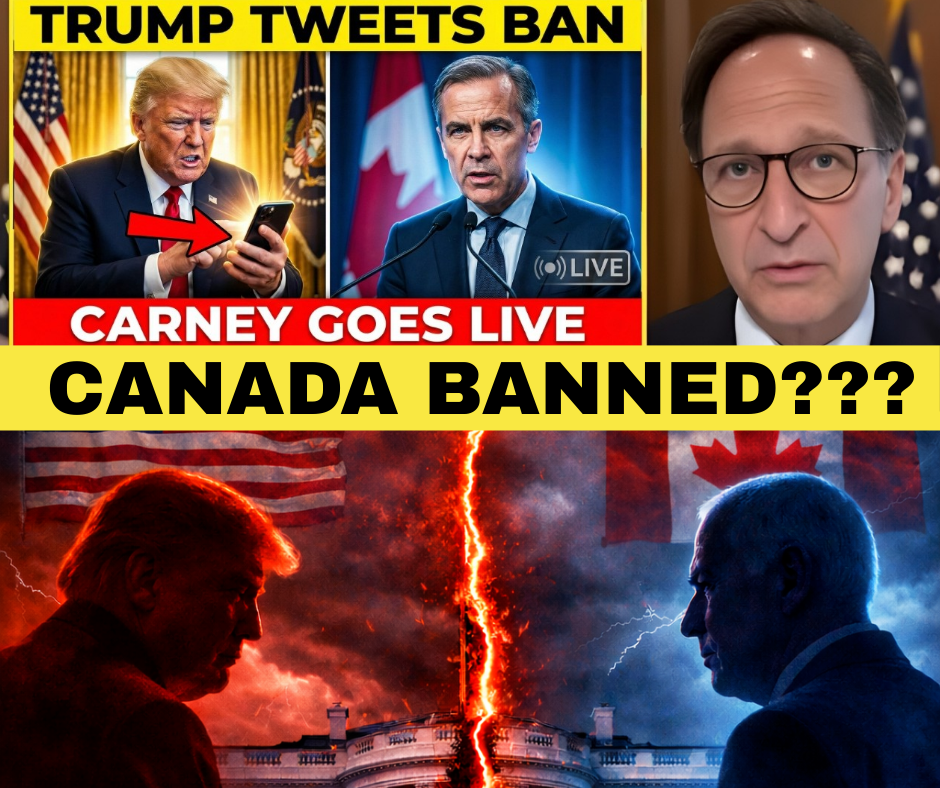
A Presidential “Ban” on Canada? Markets, Allies, and Congress Signal a Constitutional Showdown
At 9:03 a.m. Eastern on March 25, 2026, President Donald Trump posted 47 words on Truth Social declaring a “complete ban on all non-essential trade and travel” between the United States and Canada, effective in 72 hours unless Ottawa signed a sweeping “framework agreement.” No statute was cited. No national emergency was declared. No executive order accompanied the announcement.
Within minutes, the post detonated across financial markets and allied capitals. But the most consequential response did not come from Wall Street or Washington. It came from a live podium in Ottawa.
Canadian Prime Minister Mark Carney, in the middle of a nationally televised press conference, was read the president’s post aloud. Without pausing the event, Carney delivered a 60-second reply that may prove more consequential than the tweet itself: “A tweet is not a law.” He added that Canada would respond only to a formal legal instrument transmitted through proper diplomatic channels. If none existed, “there is nothing to respond to.”
Markets appeared to side with the lawyerly calm rather than the social media thunder. The dollar weakened within 20 minutes; gold rose; Treasury yields shifted. Three G7 finance ministers reportedly called Ottawa before the hour was out. A Republican chairman of the Senate Finance Committee publicly questioned whether the president had the legal authority to impose such a ban by post.
For a relationship that supports roughly $2 billion in daily commerce and millions of American jobs, this was no routine trade spat. The United States and Canada share the longest peaceful border in the world, deeply integrated energy systems, and a defense architecture that spans NATO, NORAD, and the Five Eyes intelligence alliance. Canada supplies a majority of U.S. crude oil imports, significant natural gas flows to the Northeast and Midwest, and hydroelectric power to multiple states. It is also America’s largest export market.
The president’s demand—described by sources as requiring Canada to align regulatory standards across multiple sectors and withdraw USMCA dispute challenges—arrived amid escalating tensions over auto tariffs and agricultural trade. Yet the immediate constitutional question eclipsed the policy dispute: Can a president suspend trade with America’s largest trading partner without invoking clear statutory authority?
Under U.S. law, sweeping trade restrictions generally require either congressional action or a formal executive measure grounded in statutes such as the International Emergency Economic Powers Act (IEEPA), Section 232 of the Trade Expansion Act, or Section 301 of the Trade Act of 1974. Each carries procedural requirements. Each invites judicial scrutiny. None materialize through a social media post alone.
If the White House converts the announcement into a formal executive order, it will have to choose its legal vehicle—and face likely court challenges. If it does not, and the 72-hour clock expires without action, Carney’s assertion that the tweet carried no legal standing will stand uncontested. Either path risks exposing the limits of executive trade power in unusually public fashion.
The strategic dimension is just as stark. Allies reportedly convened coordination calls within hours. The European Union and Indo-Pacific partners have their own trade exposure to Washington. A precedent that presidential threats may lack immediate legal force could alter how governments assess American leverage. Markets, for their part, do not wait for press secretaries; they price credibility gaps in real time.
Domestically, the episode underscores Congress’s constitutionally explicit authority over trade. Chairman Mike Crapo’s remarks signal that Capitol Hill may not simply rubber-stamp an expansive executive interpretation. For an administration that has framed trade as an arena of unilateral strength, the prospect of judicial injunctions or congressional resistance complicates the narrative.
Geopolitically, adversaries are watching. Beijing need not comment to benefit from allied unease. If Washington appears to blur the line between declaration and enforceable law, it weakens the very rules-based order it helped design after World War II.
Yet this moment also exposes a deeper American debate: the tension between decisive executive action and constitutional constraint. Supporters of the president argue that bold threats reset negotiations and project strength. Critics counter that improvisation without legal scaffolding erodes credibility at home and abroad.
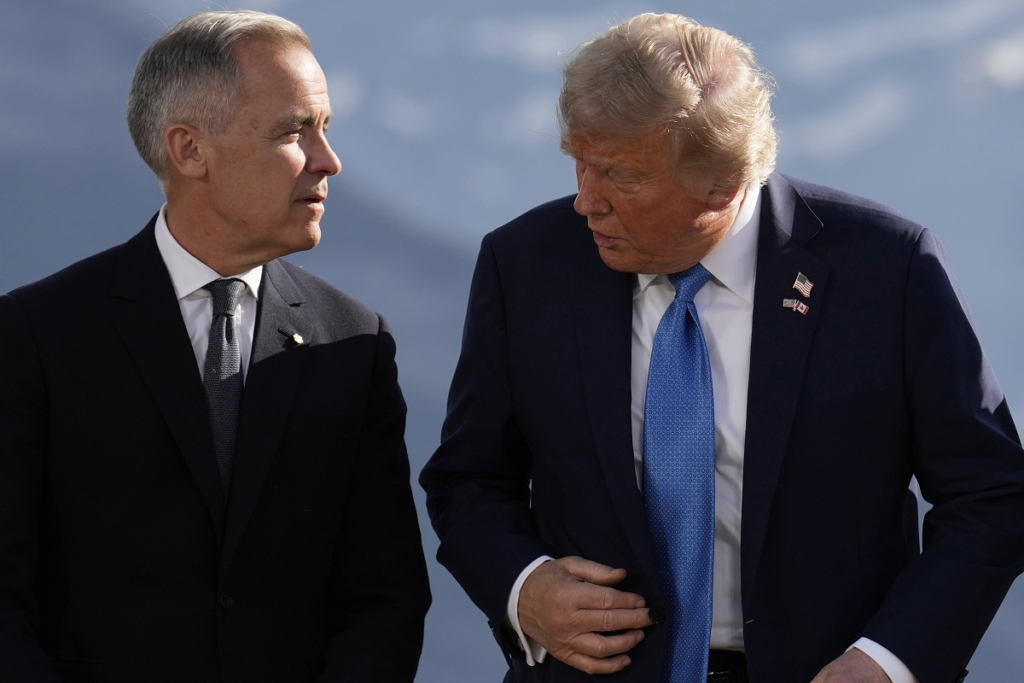
As the 72-hour deadline approaches, three outcomes loom. A formal order citing statutory authority could trigger immediate litigation and a market test of resolve. A partial retreat reframed as negotiation could soften economic shock but concede rhetorical ground. Or silence could allow the clock to expire, transforming the episode into a cautionary tale about the limits of presidential power in the digital age.
What happened at 9:03 a.m. was more than a trade announcement. It was a live demonstration of how constitutional law, market psychology, and alliance politics intersect in the era of instantaneous communication. Whether the president follows through or recalibrates, the lesson has already traveled: in global commerce, credibility is currency—and the difference between a tweet and a law has rarely mattered more.