
The architects of America’s trade war just triggered the most devastating agricultural crisis in modern history, and they did it by taxing a dirt-cheap mineral they couldn’t even name. Now, American farmers face rapid bankruptcy, grocery bills are surging, and our foreign competitors are cashing our checks.
The Arrogance of Ignorance in White House Policy
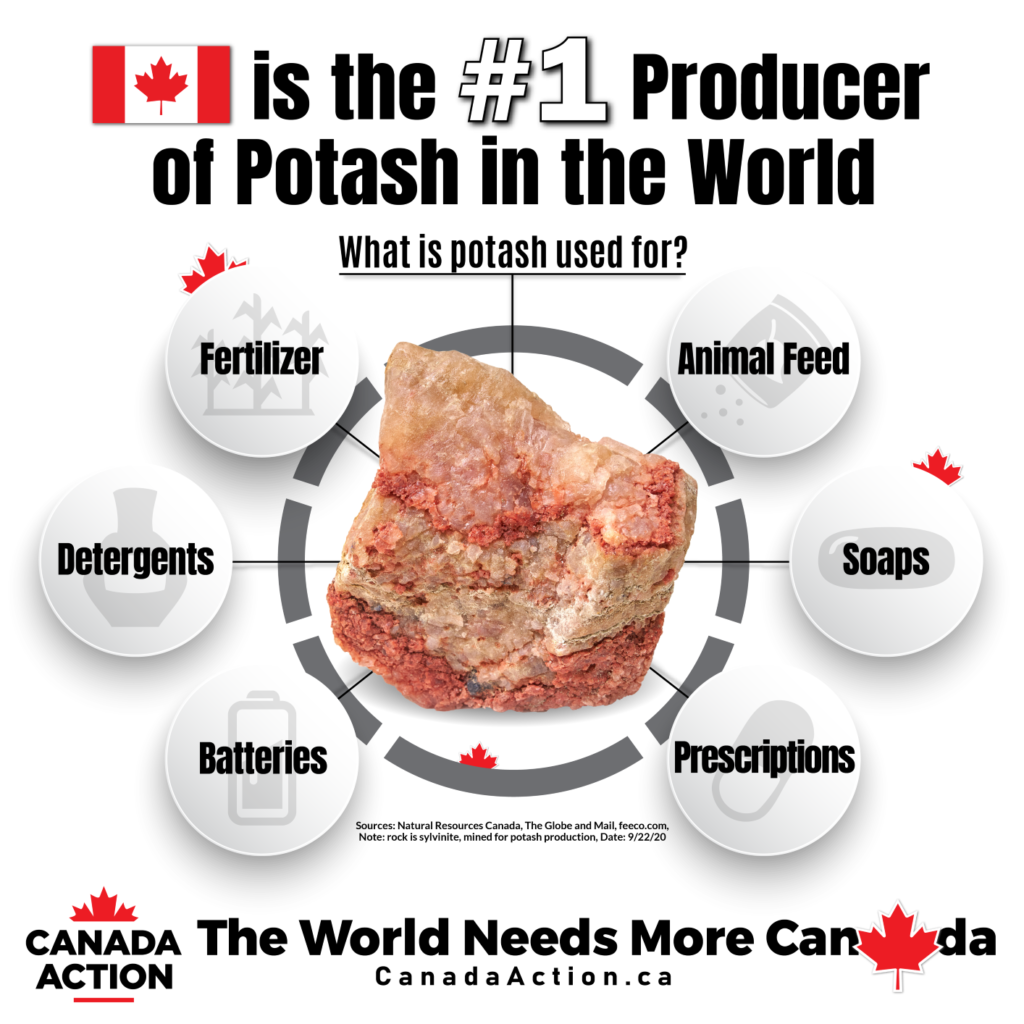
In the insulated halls of Washington, trade strategy is too often treated like an abstract geopolitical chessboard. But the latest White House policy maneuver just proved that the people turning the dials of the American economy have absolutely no idea how it actually runs. The administration slapped a blind 28 percent tariff on Canadian potash, assuming it was just another fungible commodity like steel or lumber. They were dead wrong. Potash is the non-negotiable agricultural bedrock of the republic. It is the un-synthesizable potassium mineral that regulates water absorption, builds disease resistance, and dictates the yield of virtually every commercial crop grown on American soil. The United States imports 93 percent of its potash, and nearly 80 percent of that comes from a massive underground deposit in Saskatchewan, Canada. There is no domestic alternative. There is no laboratory substitute. When bureaucrats in Washington decided to weaponize this vital supply chain, they did not punish Canada. They dropped an economic anvil directly onto the American taxpayer. But the sheer arrogance of this blind policy was only matched by the catastrophic financial doom it was about to unleash on the very voters who trusted this administration the most.
A Mathematical Massacre on the American Farm
The economic fallout was instantaneous and brutal. Because global markets price in risk the second it appears, potash prices spiked 31 percent in a matter of days. Retail fertilizer blends surged by up to 47 percent right as the crucial spring planting season commenced. For a mid-sized, 2,000-acre corn operation in Iowa, this self-inflicted White House policy added a staggering 94,000 USD to the annual fertilizer budget. In an industry where a 3 percent net margin is considered a massive victory, that single line item obliterated the entire profit margin of thousands of heartland farms overnight. American farmers were forced into an impossible, un-American dilemma: take on massive, crushing debt to buy artificially inflated fertilizer, or slash application rates and suffer a catastrophic 15 to 25 percent decline in crop yields. As rural credit lines dried up and multigenerational family farms stared down the barrel of foreclosure, the ultimate insult was brewing just across the northern border.
Warren Buffett and the Anatomy of a Self-Imposed Tax
The fundamental constitutional right of American liberty includes freedom from ruinous, unrepresentative taxation, yet this tariff acted as a direct, lethal tax on domestic agriculture. Legendary investor Warren Buffett summarized the elementary economic failure with brutal precision. He noted that while tariffing an elastic good provides leverage, tariffing an inelastic good from a monopoly supplier is nothing more than a self-imposed tax. By blindly tariffing a vital input with no substitute, the administration effectively subsidized the very Canadian industry it aimed to cripple. Because potash is traded globally, the tariff-induced panic drove up the price of every ton Canada sold to China, Brazil, India, and Europe. Saskatchewan’s potash industry is now projected to rake in an additional 3.6 billion USD in revenue this quarter alone. Washington collected pennies from struggling Kansans, while Canada collected billions from the entire globe. The administration was suddenly trapped in a political nightmare of its own making, completely unprepared for the chilling five-word response the Canadian government was about to deliver.
The Capitol Hill Reaction and a Fractured GOP
The Capitol Hill reaction was swift, furious, and violently bipartisan. Republican senators from deeply red agricultural strongholds—Kansas, Iowa, the Dakotas, and Nebraska—broke ranks, enraged that their constituents were being sacrificed on the altar of a disastrous trade war. The American Farm Bureau Federation, historically a reliable conservative ally, issued a blistering rebuke, calling the policy an outright tax on rural communities that benefits foreign producers. The political foundation of the heartland is shaking, and the tremors will undoubtedly reshape the electoral landscape ahead of the 2026 Midterms. Democratic challengers are already blanketing rural airwaves with advertisements highlighting how the administration tariffed their fertilizer and delivered bankruptcy disguised as strength.
Mark Carney’s Five-Word Lethal Injection
While American farmers bled out financially, Ottawa simply watched the quarterly profits roll in. When asked if Canada would consider stabilizing prices for devastated American farming families, Canadian Prime Minister Mark Carney delivered a masterclass in geopolitical leverage. With no anger, no triumph, and absolute calm, Carney stated an irrefutable fact: “We didn’t set the price. He did.” Those five words instantly dismantled the entire facade of the administration’s trade strategy.
Canada didn’t restrict supply. Canada didn’t retaliate. They didn’t have to. An American president tariffed an input he didn’t understand, and he did Canada’s work for them.
The 2026 Midterms and the Price of Liberty
The consequences of this agricultural malpractice will not remain confined to the farm gate. A 20 percent yield reduction in corn, soybeans, and wheat translates directly to skyrocketing grocery prices for every single American family. From the cost of beef at the butcher counter to the price of bread in the aisle, the American consumer is about to pay heavily for Washington’s ignorance. A nation that cannot feed itself affordably is a nation that has fundamentally compromised its own sovereignty and liberty. If the architects of our trade policy do not even understand the invisible minerals that grow our food, they have entirely forfeited their right to govern the American economy.
Editorial Note: The views and opinions expressed in this article are those of the authors and do not necessarily reflect the official policy or position of any agency or organization. This content is intended to provide diverse perspectives on current events.