

A New York judge just ignited a financial powder keg, refusing to delay a massive civil fraud judgment against Donald Trump. As the legal bill hits a staggering $464,576,230.62, American voters are watching a weaponized justice system collide with the 2024 election in real time.
The Eight Words That Shook an Empire
In the high-stakes arena of New York civil practice, eight words from a judge can rewrite history. “You have failed to explain, much less justify,” wrote Judge Arthur Engoron in a terse email to Trump attorney Clifford Robert. With that decisive communication, the court flatly denied a 30-day delay to formalize the $354.8 million disgorgement penalty. For the American taxpayer watching this spectacle, the sheer velocity of the state’s machinery is breathtaking. The moment the clerk enters the judgment, a relentless statutory clock begins to tick. Under New York law, a 9 percent annual interest rate immediately attaches, translating to a punishing $112,000 per day in accruals. This is not merely a legal defeat; it is a financial hemorrhage designed to force capitulation. But this staggering sum is merely the opening salvo in a much larger, coordinated legal siege.
A Collision of Legal Clocks
The calendar itself has been weaponized. As CNN’s Cara Scannell noted, the finalization of this judgment meant Trump would have to secure a massive bond at the exact moment he was scheduled to face criminal hush money charges in Manhattan. This convergence of legal clocks is no accident. The hush money trial and the civil fraud bond deadline were slated for the exact same week.
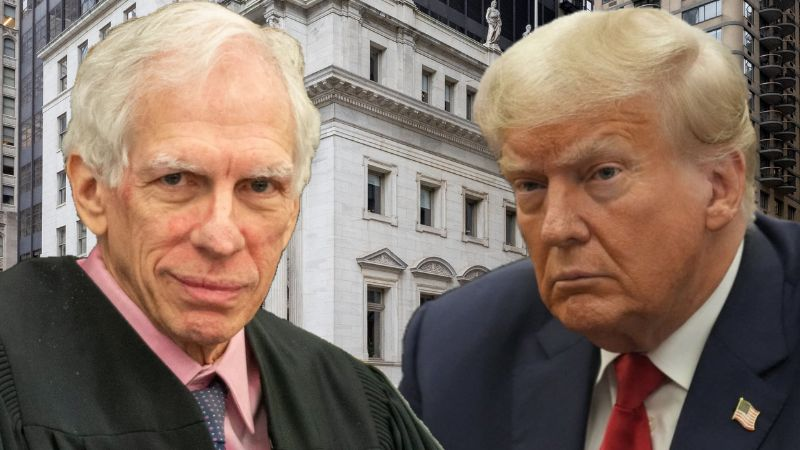
The Capitol Hill reaction was predictably explosive, with lawmakers pointing out that the leading Republican candidate was being simultaneously drained of his wealth and his freedom to campaign. At the center of both storms sits Michael Cohen, the connective tissue whose testimony underpins this dual-front assault. Yet, behind the scenes, a quiet financial maneuver was already threatening to dismantle his legacy brick by brick.
The Anatomy of a Real Estate Fire Sale
To understand the gravity of this moment, one must realize the difference between nominal wealth and immediate liquidity. Trump’s empire is built on iconic properties stretching for miles across the American skyline, not piles of dormant cash. Adding the $83.3 million E. Jean Carroll federal defamation verdict, Trump’s total civil exposure in early 2024 ballooned past $540 million USD. The court’s 30-day window to post an undertaking is a structural trap for a real estate billionaire. If forced to liquidate a property like 40 Wall Street within a month, the resulting fire sale would yield pennies on the dollar, stripping him of his private property rights through procedural strangulation. The real danger, however, lies not in the brick and mortar, but in the constitutional precedent this sets for every taxpayer.
Weaponized Justice or Overdue Accountability?
The partisan divide over this judgment is absolute. For Democrats, Attorney General Letitia James is delivering accountability. For Republicans, this is the ultimate manifestation of lawfare—a direct extension of aggressive White House policy aimed at bankrupting a political rival. The tremors of this unprecedented legal strategy will undoubtedly shape the 2026 Midterms, as voters weigh whether the justice system has been irreparably compromised. Trump’s defense argued the state faced no prejudice from a brief delay because an independent monitor was already policing the company’s books.
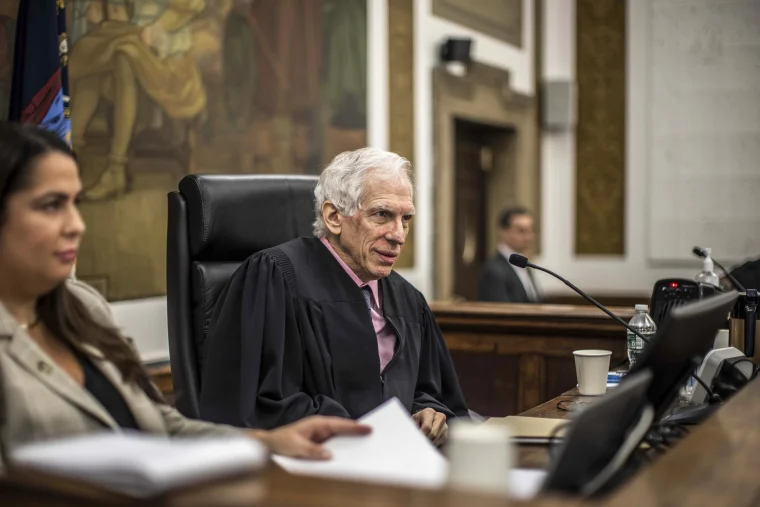
As the partisan divide deepens, a shadow figure embedded deep within the Trump Organization holds the key to the ultimate financial endgame.
The Embedded Monitor and the State’s Machinery
Former federal judge Barbara Jones, the court-appointed monitor, operates as an embedded supervisor with sweeping authority over the Trump Organization’s finances. She reviews transactions and flags asset transfers, ensuring wealth is not moved offshore. Trump’s legal team argued Jones’s presence negated the need to rush the judgment’s entry. If the monitor is watching the vault, the state’s money is safe. Judge Engoron rejected this logic entirely. The state’s interest, he signaled, is not just in securing the funds, but in starting the brutal 9 percent interest clock. This procedural ruthlessness inevitably forces us to ask a terrifying question about the very foundation of American liberty.
The Eighth Amendment Under Siege
At the core of the American republic is the constitutional guarantee against excessive fines and cruel and unusual punishment. The Eighth Amendment exists precisely to prevent the state from using ruinous financial penalties to destroy political opponents. While the Appellate Division eventually slashed the required bond to $175 million, the underlying penalty remains a glaring constitutional stress test.
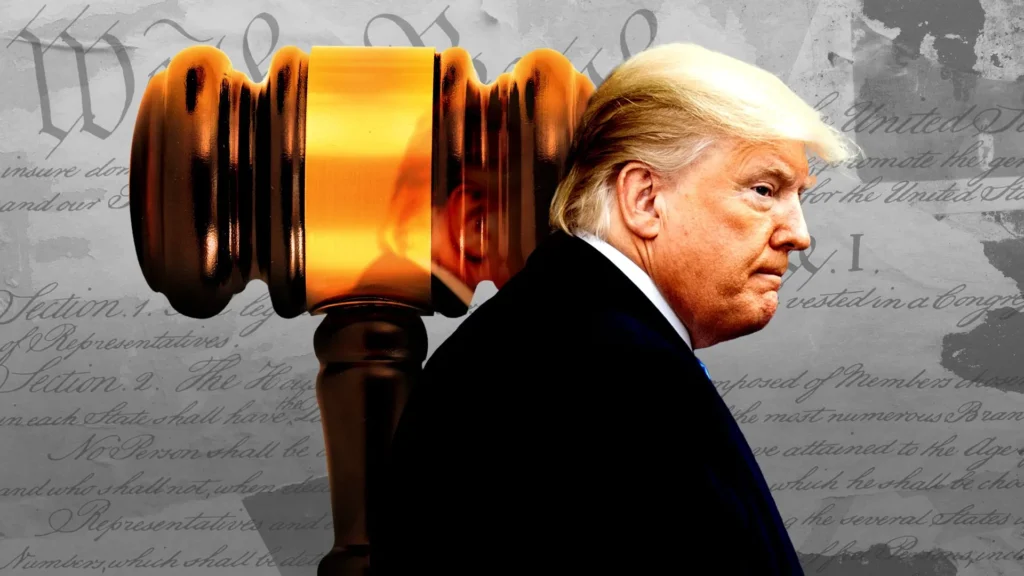
The state utilized a victimless civil fraud statute to levy a half-billion-dollar penalty, raising profound questions about liberty, due process, and the rights of business owners operating within the United States. And as the final pennies are tallied, the true cost of this legal warfare is finally presented to the public.
Down to the Exact Cent
When the clerk finally processed the judgment, Attorney General Letitia James took to social media to post the exact figure: $464,576,230.62. There was no commentary, no gloating rhetoric—just the cold, calculated weaponization of math. The inclusion of the cents, derived from the daily accrual of prejudgment interest, was a stark message. It signified the relentless, uncompromising nature of a state apparatus fully mobilized against a single individual. The 30-day clock had started, the interest was compounding, and the battle for the future of American justice had reached its absolute boiling point.
Editorial Note: The views and opinions expressed in this article are those of the authors and do not necessarily reflect the official policy or position of any agency or organization. This content is intended to provide diverse perspectives on current events.