
Impulse vs. Preparation: A 12-Hour Clash That Reframed the U.S.–Canada Trade Fight
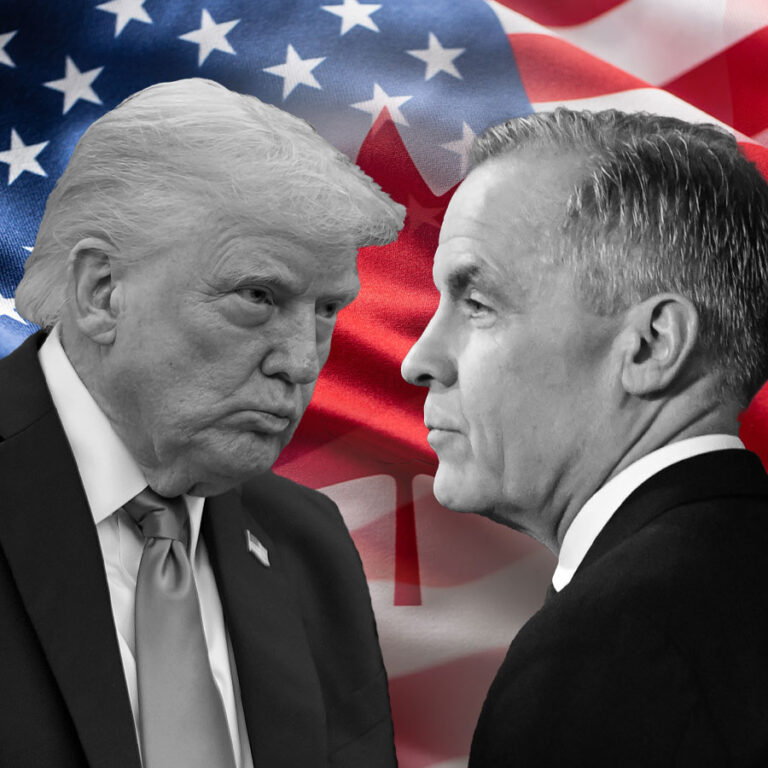
In geopolitics, there are moments when the fog lifts and leadership styles are revealed in stark relief. Yesterday’s extraordinary 12-hour confrontation between President Donald Trump and Canadian Prime Minister Mark Carney was one of those moments. It was not merely a trade dispute. It was a public test of temperament, preparation, and strategic discipline—watched in real time by markets, allies, and adversaries alike.
The day began at 6:30 a.m. with a pre-recorded interview airing on Canadian morning television. Carney, calm and data-driven, discussed Canada’s diversification strategy—new trade linkages with the EU and Indo-Pacific partners, expanded energy export infrastructure to both coasts, and a deliberate push to reduce dependency on any single trading partner. One line cut through: “Canada’s economic future is no longer hostage to the decisions of any single trading partner.”
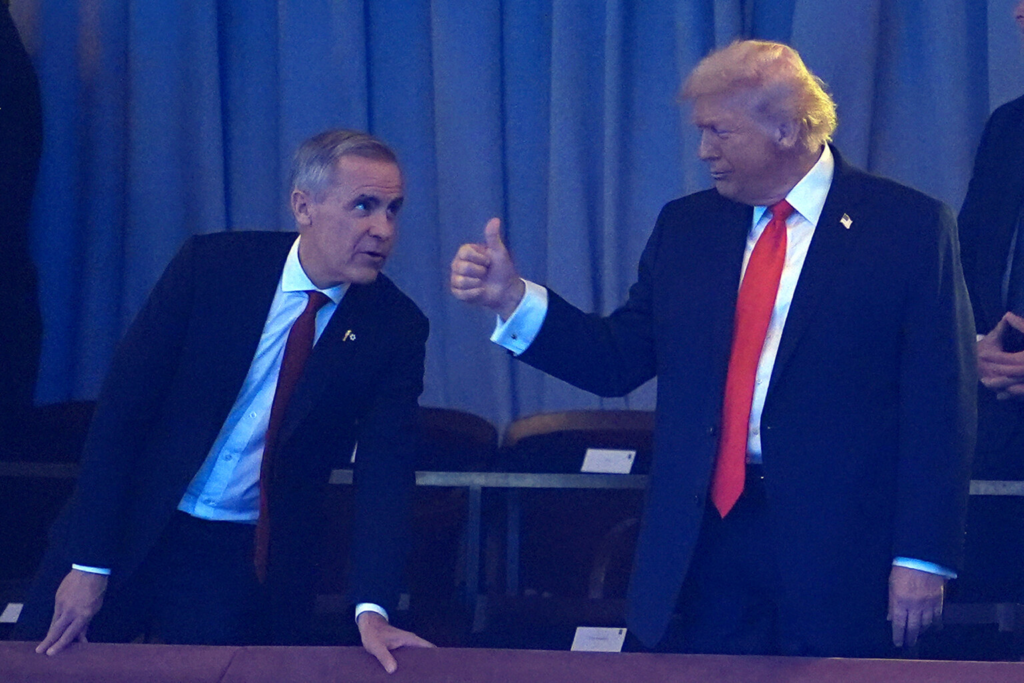
Within 45 minutes, President Trump responded with six social media posts accusing Canada of ingratitude, economic exploitation, and political posturing. By 8:00 a.m., speaking to reporters on the White House lawn, he escalated further—floating potential banking restrictions on Canadian institutions operating in the U.S., an immediate freeze on Canadian energy imports, and possible withdrawal proceedings from the USMCA trade agreement.
The striking detail: senior economic officials reportedly learned of these threats through media alerts. There was no coordinated rollout, no interagency briefing, no evident policy memo. In military history, this resembles a cavalry charge without reconnaissance—dramatic, forceful, but strategically exposed.
Markets opened nervous. The Canadian dollar dipped. Energy stocks fluctuated. Trade-sensitive sectors showed volatility. Trump allies framed this as leverage at work. But seasoned traders were waiting. The opening salvo in any confrontation is less important than the counter.
For four and a half hours, Ottawa was silent.
Cable panels speculated that Carney had been caught flat-footed. Conservative commentators declared the White House had seized the initiative. But silence, as any student of strategy knows, can signal staging rather than weakness.
At 12:30 p.m., Carney addressed Parliament. He did not match rhetoric with rhetoric. Instead, he dismantled each threat with technical precision.
On banking restrictions, he noted Canadian financial institutions hold approximately $2.4 trillion in global assets and are deeply integrated into U.S. lending and cross-border capital flows. Disrupting them, he argued, would reverberate through American mortgage markets and commercial financing.
On energy, he cited data showing that a majority of U.S. crude oil imports come from Canada. An abrupt freeze, he warned, would raise gasoline prices and strain refinery supply chains—costs borne not in Ottawa, but in American households.
On USMCA withdrawal, he pointed to the agreement’s legal framework requiring formal procedures and congressional involvement. It was a constitutional rebuttal, not a political insult.
Simultaneously, Canada announced targeted economic countermeasures: restrictions affecting fertilizer exports crucial to U.S. agriculture and administrative reviews impacting pipeline allocations. Rather than sweeping tariffs, the measures were calibrated—politically sensitive, economically strategic.
Then came the diplomatic layer. Within 90 minutes, statements from the United Kingdom, Japan, the European Union, Australia, and South Korea emphasized support for rules-based trade and cautioned against unilateral economic threats. Coordination at that speed suggested prior consultation.
By market close, the reaction was clear. The Canadian dollar strengthened. U.S. agricultural futures spiked on supply uncertainty. Trade-sensitive equities softened. Investors were not reacting to ideology—they were pricing perceived stability versus unpredictability.
That evening, at a Berkshire Hathaway event, Warren Buffett offered a characteristically understated observation: “Preparation is the single most reliable indicator of competence. Improvisation in high-stakes situations is not creativity. It’s unpreparedness—and unpreparedness always has a cost.”
Buffett did not endorse either leader. He assessed management quality. Markets, he implied, do the same.
What does this episode reveal? From a military-historical lens, conflicts are rarely decided by the loudest opening strike. They are decided by logistics, alliances, and readiness. In 1914, mobilization timetables mattered more than speeches. In 1962, the Cuban Missile Crisis was resolved not by rhetoric, but by disciplined planning and calibrated signaling.
Here, the asymmetry was visible. One leader reacted in real time. The other appeared to deploy a pre-constructed response package—data, legal analysis, targeted countermeasures, and allied coordination.
For American voters, the debate extends beyond trade balances. It touches a deeper question: What constitutes strength in modern statecraft? Is it the willingness to escalate publicly and unpredictably? Or the capacity to anticipate, prepare, and shape outcomes before the crisis erupts?
Critics of the administration argue that impulsive signaling undermines U.S. credibility and injects volatility into markets. Supporters counter that unpredictability itself is leverage—that it keeps opponents off balance and disrupts complacent global norms.
Yet this exchange complicates that narrative. If counterparts can anticipate escalation and pre-position responses, unpredictability loses some of its shock value. In strategic terms, a move that becomes expected is no longer disruptive—it is incorporated into planning.
Internationally, the optics matter. Allies evaluate reliability not by rhetoric but by process. Investors assess governance through stability and foresight. If foreign governments conclude that major economic threats can emerge without institutional vetting, risk premiums rise accordingly.
None of this settles the broader trade dispute. Structural tensions between the U.S. and Canada—over energy, manufacturing, supply chains—remain real. But yesterday’s clash reframed the contest. It was not simply about tariffs or pipelines. It was about leadership models.
In twelve hours, the world watched impulse confront preparation. Markets rendered a short-term judgment. Diplomats recalibrated. Senators in affected agricultural states reportedly sought clarification. And voters were left with a question that will echo far beyond this episode:
In an era of great-power competition and economic interdependence, which style better safeguards American interests—the shock of improvisation, or the discipline of strategy?
The answer may define not just this trade conflict, but America’s role in the global order for years to come.