
War With Iran: The $300 Billion Gamble That Could Reshape America’s Political Future
Washington woke up this week to a reality few believed would materialize so quickly: the United States is at war with Iran.
The strikes began on Saturday, February 28. What had been weeks of military buildup, diplomatic maneuvering, and internal White House debate culminated in a coordinated campaign that U.S. officials describe as the most aggressive action against Iran since 1979. Within days, the consequences—military, economic, and political—were already rippling through global markets and American households.
But this story did not begin with the first missile launch. It began with a warning.
The Warnings Inside the White House
On February 21, Reuters reported that President Trump’s own advisers were urging restraint. Their message was blunt: focus on the economy, not Iran. With midterm elections looming and inflation still fresh in voters’ minds, they feared a Middle East war could detonate the fragile economic recovery.
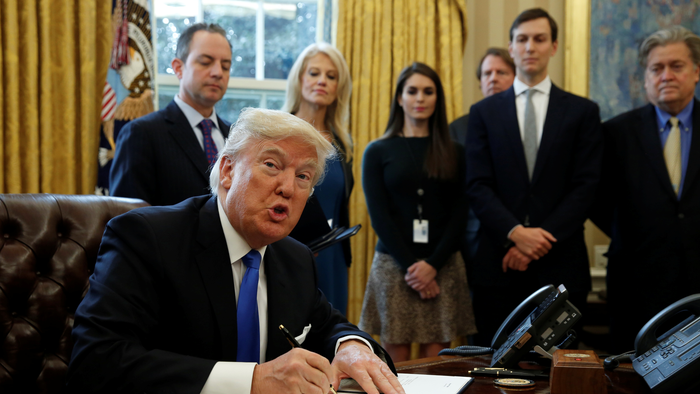
Axios cited one adviser who put the probability of “kinetic action” at 90% within weeks. That was not outside speculation—it was coming from inside the administration. Senior officials understood the scale of the military mobilization underway: carrier strike groups deployed, hundreds of aircraft positioned, B-2 bombers staged. Once that machinery is in motion, the gravitational pull toward action becomes immense.
Still, dissent persisted. Jared Kushner and special envoy Steve Witkoff reportedly pushed for continued diplomacy, believing a nuclear agreement remained possible. Israeli Prime Minister Benjamin Netanyahu, by contrast, argued Iran had never been weaker and that the window for decisive action was closing.
When intelligence indicated senior Iranian leadership was gathered in one location, the debate ended. Authorization followed within hours.
The Economic Shockwave
The White House framed the strikes as preemptive and strategically necessary. Markets responded differently.
Before the bombing, Brent crude was already hovering near $89 per barrel. Within days, oil spiked sharply as fears mounted over disruption in the Strait of Hormuz—a chokepoint through which roughly 15% of global seaborne oil flows.
Energy analysts warn that sustained disruption could push oil above $100 per barrel, with worst-case scenarios reaching $130. For the United States, which consumes roughly 20 million barrels daily, a $40 increase translates to nearly $300 billion annually in additional costs from oil alone.
That does not include direct military expenditures—estimated conservatively at $50 billion for a multi-week air campaign—nor the impact on financial markets. A 7% drop in total U.S. market capitalization would erase trillions in household wealth, hitting retirement accounts and pensions nationwide.
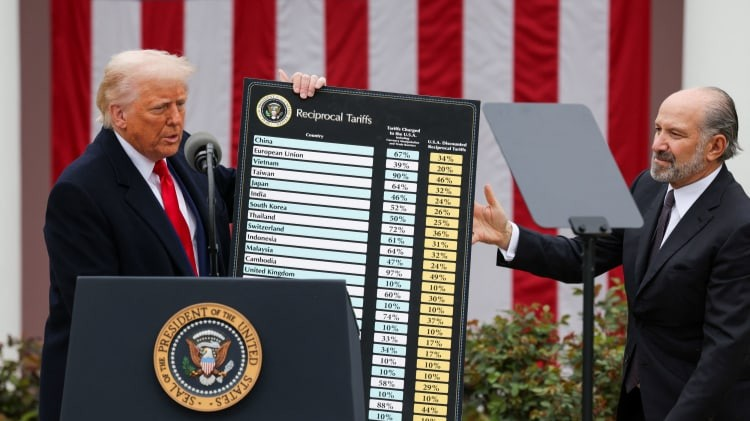
Inflation, which had been stabilizing, now risks re-acceleration. Economists at ING and Natixis warn that an oil spike could add two to three percentage points to the Consumer Price Index. That raises the specter of stagflation: rising prices paired with slowing growth. A scenario the Federal Reserve is ill-equipped to manage without painful tradeoffs.
JP Morgan analysts noted this week that business confidence—just beginning to recover—now faces renewed uncertainty. A war layered atop ongoing trade tensions could stall investment and hiring.
In short, the economic bill may far exceed the opening military price tag. Some projections place the total exposure—energy costs, market losses, recession risk—well north of $1 trillion if the conflict drags on.
Strategic Victory or Strategic Vacuum?
President Trump has claimed early operational success, including the elimination of senior Iranian leaders and severe degradation of Iran’s naval capabilities. If confirmed, this would represent a historic decapitation strike against a regime that has challenged U.S. interests for decades.
Yet military success creates its own strategic questions.
Who fills the vacuum left behind? Fragmentation within Iran’s Revolutionary Guard could reduce centralized resistance—or it could produce decentralized retaliation. Proxy groups in Lebanon, Iraq, and Yemen retain capacity to escalate. The Strait of Hormuz remains partially disrupted.
History looms large. The Iraq War initially boosted presidential approval ratings before prolonged conflict and rising costs reversed the political tide. Today’s geopolitical environment is arguably more economically fragile and globally interconnected.
The Electoral Reckoning
Politically, the stakes are enormous.
Republicans currently hold a narrow majority in the House. Historically, the president’s party loses seats in midterms. Add high gas prices and market volatility, and vulnerable districts in Pennsylvania, Arizona, Wisconsin, and Nevada become battlegrounds.
GOP strategists privately acknowledge the risk. As one former administration official noted, “No one thinks war in the Middle East is popular during an inflation cycle.”
If oil stabilizes and the conflict ends swiftly, the administration could claim decisive leadership. But if energy prices remain elevated into the summer and inflation resurges, voters may judge the economic cost more harshly than the strategic gain.
Two Paths Forward
There are two plausible trajectories.
In the optimistic scenario, Iranian power structures fracture without prolonged retaliation. Oil markets stabilize. Inflation rises temporarily but does not spiral. The conflict ends within weeks, and the White House pivots back to domestic priorities.
In the darker scenario, retaliatory attacks intensify. Oil remains above $100 through the summer. Inflation climbs toward 6–7%. The Federal Reserve faces pressure to maintain tight policy amid slowing growth. Stagflation becomes a political and economic reality heading into November.
Which path unfolds depends less on Washington’s rhetoric and more on Tehran’s next moves.
The Unanswered Questions
As of March 5, six American service members have been confirmed dead. Regional tensions are widening. Markets remain volatile. Key questions persist: What is the endgame? Is regime change an objective or merely an unintended consequence? How long will American forces remain engaged?
Wars often begin with clarity of purpose and end with complexity. The decision to strike may ultimately be judged not only by battlefield results but by gas prices, retirement accounts, and ballot boxes.
For American voters, the calculus is stark: Was this a necessary preemptive action that neutralized a long-term threat—or a high-risk gamble that exchanged economic stability for uncertain strategic gains?
The coming months will deliver the answer.