
As markets brace for opening bells and oil traders prepare for what could be the most volatile session in years, a geopolitical earthquake is unfolding—not only in the Persian Gulf, but across the global energy order.
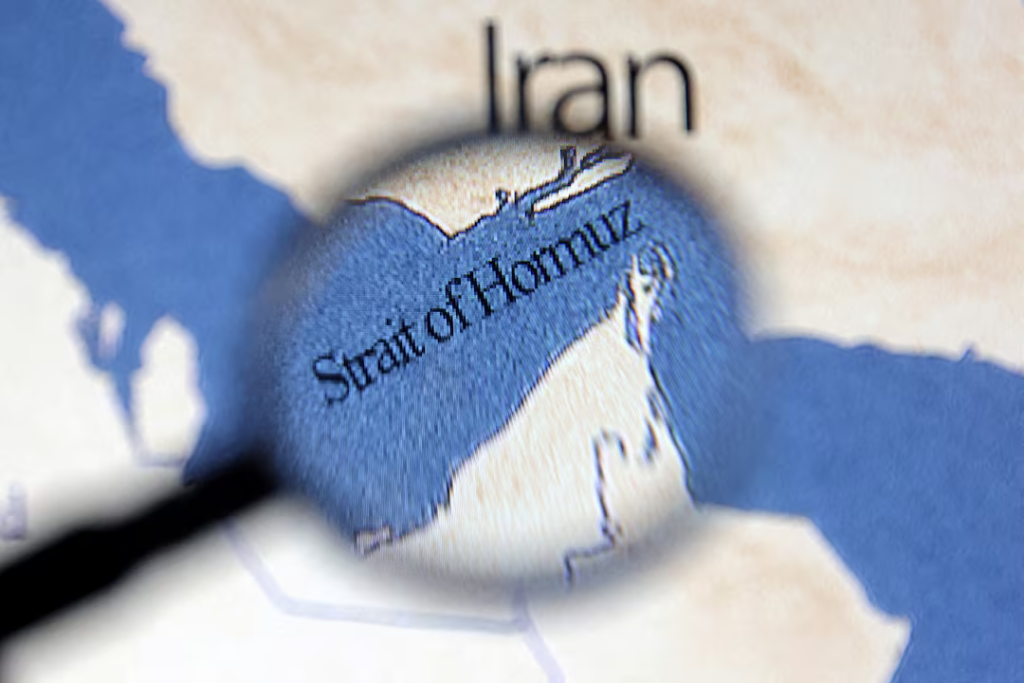
Following the largest coordinated U.S.–Israeli military strike on Iran since the 2003 invasion of Iraq, Tehran has mobilized forces around the Strait of Hormuz. Major shipping firms have reportedly suspended tanker transits through the narrow waterway. Roughly 20% of the world’s oil supply—about 13 million barrels per day—flows through that 30-mile choke point.
If the disruption persists, oil prices could surge well beyond $100 per barrel. Brent crude had already closed at $72 before the escalation. Energy analysts are now whispering numbers not seen in over a decade: $110, even $130, if escalation spirals.
But while cameras fixate on burning oil infrastructure and Pentagon briefings, another story is unfolding thousands of miles away—one that could permanently reshape the Western alliance system.
Canada is moving.
A War in the Gulf, A Pivot in Delhi
As missiles fly in the Middle East, Canada’s Prime Minister is not huddled in Ottawa. He’s in New Delhi.
In less than a week, Ottawa and India are finalizing a multi-billion-dollar uranium supply agreement reportedly valued at C$2.8 billion over ten years. Canada, already the world’s second-largest uranium producer, controls some of the richest ore deposits on the planet in Saskatchewan’s Athabasca Basin. With global nuclear expansion accelerating, uranium is no longer a niche commodity—it’s strategic fuel.
India, one of the fastest-growing major economies, needs stable energy sources that don’t transit through war zones. Canada can provide that. And beyond uranium, discussions reportedly include liquefied natural gas exports and long-term cooperation on critical minerals—materials essential for batteries, semiconductors, and defense technologies.
This isn’t opportunistic diplomacy. It looks more like structural repositioning.
America’s Tariff Gambit—and Its Limits
Meanwhile, Washington is entangled in trade tensions that complicate the alliance picture.
After the Supreme Court struck down certain emergency tariff authorities, the White House pivoted to alternative legal tools to impose new global tariffs, while keeping sector-specific measures—steel, aluminum, autos—intact under national security provisions.
Canada, historically dependent on U.S. markets for over 95% of its oil exports, appears to be recalculating.
Here’s the strategic catch for Washington: the United States imports approximately 3.3 million barrels per day of Canadian crude. Many Midwest and Gulf Coast refineries are specifically configured to process heavy Canadian oil. Retooling them would take years and cost billions.
Any serious trade rupture would not just hurt Canada—it would spike gasoline prices in politically sensitive American states.
Ottawa understands that leverage.
The Pacific Energy Corridor
The real turning point may have occurred before this crisis. The expansion of the Trans Mountain Pipeline in 2024 dramatically increased Canada’s ability to ship oil to its Pacific coast, opening Asian markets. For decades, Canadian producers were effectively landlocked, forced to sell at discounted rates to U.S. buyers.
That constraint is now easing.
Canada has also been rebuilding trade ties with China, reopening agricultural markets and expanding mineral exports. Formal critical mineral partnerships have been established with Germany and Australia. LNG export projects on Canada’s west coast aim to supply Asian buyers later this decade.
In effect, Ottawa is constructing what some analysts call a “Pacific Energy Corridor”—an export architecture that reduces reliance on any single customer.
A Structural Shift in Global Energy?
For 80 years, the post-World War II order rested on certain assumptions: U.S. naval dominance securing oil flows through the Gulf, OPEC managing supply, the dollar anchoring global trade.
The current crisis challenges each of those pillars. The Strait of Hormuz is no longer perceived as guaranteed open. The Middle East’s vulnerability is on full display. And U.S. trade policy toward allies has become more transactional.
In that context, Canada offers something rare: massive proven reserves, political stability, and a track record of not weaponizing exports.
It possesses the world’s third-largest oil reserves, ranks among top uranium producers, and holds significant deposits of critical minerals NATO classifies as defense-essential. Crucially, it has never cut off energy exports for political leverage.
For countries seeking long-term supply contracts insulated from geopolitical chaos, that combination is attractive.
The July Test: USMCA Review
The next inflection point arrives July 1, 2026, when the North American trade agreement faces mandatory review.
If Washington demands sweeping concessions—limits on Canadian trade with China, pricing adjustments favoring U.S. buyers, or structural manufacturing advantages—Ottawa now has more credible alternatives than at any time in its modern history.
That doesn’t mean Canada can—or would—decouple from the U.S. The economic integration is profound. But dependency has shifted from one-sided to mutual.
And in geopolitics, reduced dependency equals increased negotiating power.
Two Possible Futures
If Gulf tensions deescalate within weeks, oil may stabilize around $85–$90. Canada’s diversification will proceed, but without emergency urgency.
If escalation continues—if the Strait closes and oil surges past $130—the consequences could be recessionary across Europe and Asia. Strategic petroleum reserves would drain quickly. In that scenario, Canada’s role as a stable, high-volume supplier would become indispensable.
The broader question is not simply about oil prices.
It’s whether we are witnessing a rebalancing of Western energy leadership—away from volatile chokepoints and toward politically stable producers with diversified export routes.
For American audiences, this poses a provocative dilemma:
Is Canada executing a long-term strategic pivot that strengthens the Western alliance by diversifying energy supply?
Or is it leveraging crisis to reduce U.S. influence in ways that could fragment North American economic cohesion?
The old assumption was that Ottawa would always align quietly with Washington because it had no viable alternative.
That assumption may no longer hold.
As markets open and oil traders react, the visible drama will unfold in futures contracts and shipping lanes. The quieter transformation may be happening in boardrooms, pipeline terminals, and diplomatic corridors stretching from Delhi to Tokyo.
The Strait of Hormuz may be the flashpoint—but the real story could be who emerges as the most trusted supplier in a world where trust has become the scarcest commodity of all.