
While working families slept, the Commander-in-Chief bypassed Capitol Hill to issue a midnight social media ultimatum that could plunge 90 million people into darkness and send gas prices soaring past $5 a gallon. For the American taxpayer footing the bill, the constitutional guardrails just snapped.
A Constitutional Crisis Forged in Florida
The machinery of American democracy is grinding against a perilous new reality. Late Saturday night, the President of the United States bypassed traditional Oval Office addresses and National Security Council protocols to issue a 48-hour ultimatum on social media from his Florida residence. The demand was absolute: Iran must fully reopen the Strait of Hormuz, or the United States will systematically obliterate their civilian power plants, “starting with the biggest one first.” This is not merely a shift in White House policy; it is a profound test of the separation of powers. By circumventing congressional oversight, the executive branch is unilaterally drawing a red line that threatens to drag the entire Middle East into an uncontrollable conflagration. The stakes could not be higher for a republic founded on the principle that the power to declare war rests with the people’s representatives. But as the clock ticks closer to Monday night’s deadline, a far more dangerous question emerges from the shadows of this digital diplomacy.

Operation Epic Fury and the Capitol Hill Reaction
To understand the gravity of this impending deadline, voters must look at the unauthorized conflict that brought us here. On February 28, while delicate diplomatic negotiations were still underway in Geneva, the United States and Israel unleashed Operation Epic Fury. In a staggering display of military might, nearly 900 strikes rained down across Iran within 12 hours, killing Supreme Leader Ali Khamenei and propelling his son, Mojtaba, into power. Over 5,300 people have perished in the ensuing four weeks, including more than 500 civilians. Yet, the Capitol Hill reaction has been a masterclass in partisan paralysis. The House failed to pass a War Powers Resolution on March 4, and Senate Republicans blocked a subsequent attempt on March 18. The Constitution demands that when American blood and treasure are on the line, Congress must authorize the fight. Instead, the legislative branch has effectively surrendered its mandate, leaving the nation entirely dependent on the volatile whims of a singular executive. And the fallout is already bleeding the American working class dry.
The Economic Shockwave Hitting the American Taxpayer
For the everyday American taxpayer, this foreign policy crisis is not an abstract debate over international law; it is a daily financial hemorrhage. By early March, Iran had choked off the Strait of Hormuz—a vital maritime artery handling a fifth of the world’s oil supply. The domestic reaction was brutal and immediate. Brent crude shattered the $105 threshold, and the price at the pump skyrocketed from $2.94 to $3.93 a gallon. This sudden spike acts as a crushing, regressive tax on working families who were already promised economic relief. Small business owners are watching shipping costs evaporate their margins, while inflation fears threaten to dominate the narrative heading into the 2026 Midterms.
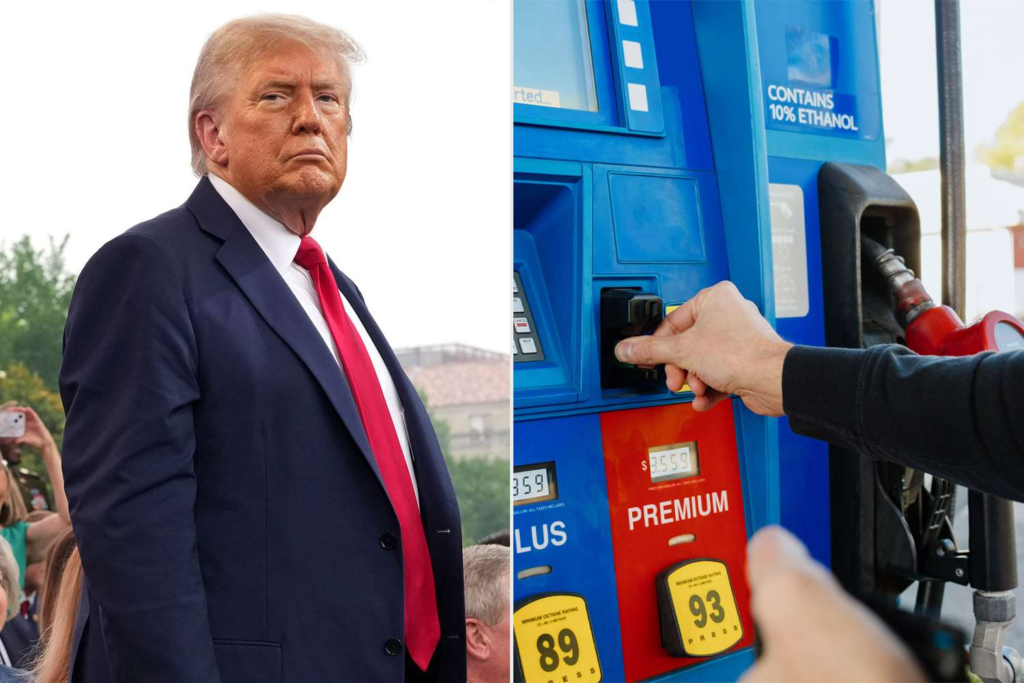
When a dollar more per gallon is drained from the pockets of voters in Ohio and Pennsylvania just to fund an unauthorized military escalation, the political calculus becomes deeply toxic. But the financial toll is only half the story, as a glaring contradiction at the very top of the military command chain threatens to unravel the entire operation.
The White House Policy Disconnect
The most alarming aspect of this weekend’s ultimatum is the stark disconnect between the Commander-in-Chief and his top military brass. Just hours before the social media post threatening the obliteration of infrastructure serving 90 million Iranian civilians, Admiral Brad Cooper at Central Command indicated that Iran’s ability to target vessels had already been significantly degraded. Furthermore, the President himself stated just a day prior that the United States was “winding down the war.” The whiplash from de-escalation to the threat of catastrophic, Geneva Convention-testing strikes on civilian water treatment and hospital power grids reveals a fractured White House policy. When the Pentagon’s battlefield assessment directly contradicts the President’s digital threats, it projects confusion rather than American strength. This erratic posturing leaves both lawmakers and military families desperately searching for a coherent strategy, while the rest of the globe watches the chaos unfold in real time.
Allies in the Dark and Adversaries Watching
American national security has historically relied on the ironclad strength of its global alliances, but this unilateral approach is fracturing those vital bonds. Nations like Japan and South Korea, which import nearly 90 percent of their oil through the Strait of Hormuz, alongside European allies like the UK, France, and Germany, learned of this 48-hour deadline exactly how the American public did: by scrolling through their phones. By cutting allied leaders out of the deliberative process, the administration is telegraphing to adversaries in Moscow, Beijing, and Pyongyang that American decision-making is fundamentally unpredictable and destabilizing.

Diplomatic coalitions are built in situation rooms, not on social media feeds. If the United States strikes Iranian power grids, Tehran’s military has already vowed to retaliate against all energy and desalination infrastructure belonging to America and its allies across the Gulf, placing stationed US service members squarely in the crosshairs. The trap is set, and the administration has backed itself into a corner with no viable exit strategy.
Three Scenarios for the 2026 Midterms and Beyond
As the Monday night deadline rapidly approaches, the political and strategic ramifications threaten to reshape the 2026 Midterms. If Iran partially complies, the administration might claim a hollow victory, but the underlying, unauthorized war will continue to burn without a defined endgame. If the President executes the threat, plunging 90 million civilians into darkness, the inevitable Iranian retaliation against Gulf energy facilities could send oil hurtling past 150 USD a barrel, sparking a regional conflagration and domestic economic ruin. Alternatively, if the deadline passes with no action, American credibility evaporates instantly, emboldening adversaries worldwide. None of these outcomes serve the liberty, prosperity, or security of the American republic.
The Republic’s Final Guardrails
The ultimate measure of a great nation lies in its adherence to constitutional principles and the rule of law. It is now entirely up to the American voters to demand that Congress reclaims its constitutional duty, forcing accountability before an unauthorized digital decree dictates the tragic fate of a generation. The story of this conflict is still being written, but the window for the republic to assert its constitutional authority is closing fast.
Editorial Note: The views and opinions expressed in this article are those of the authors and do not necessarily reflect the official policy or position of any agency or organization. This content is intended to provide diverse perspectives on current events.